
Recycling Film, Woven Bags and Raffia: Why Bulk Density Breaks Normal Shredders
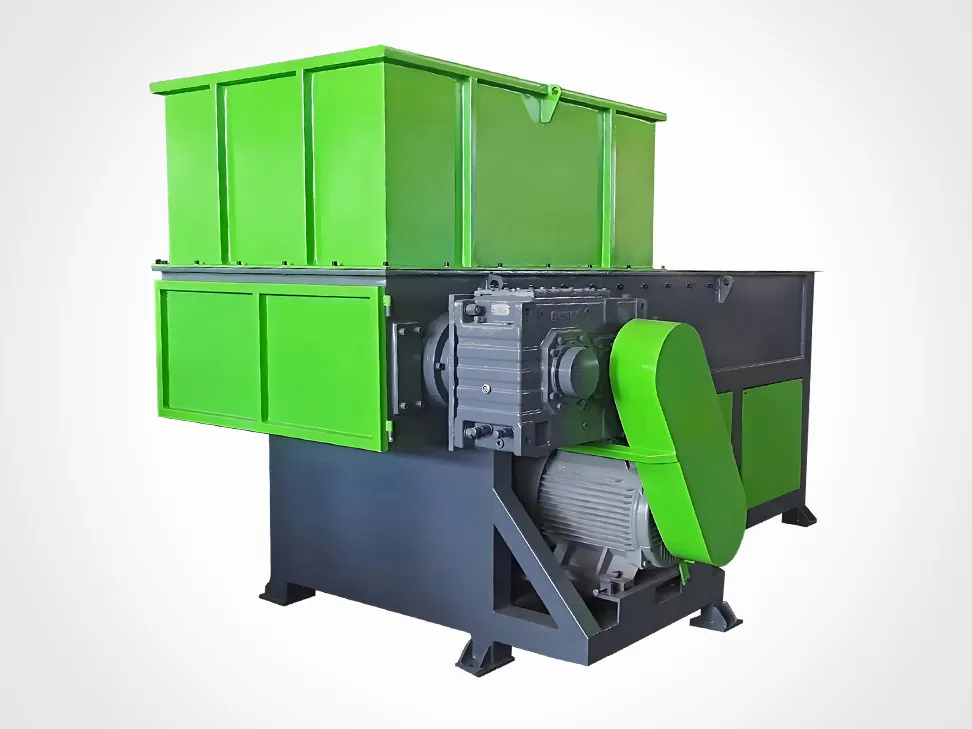
Film, woven bags and raffia are the materials that separate a machine specification from a machine that works. A shredder that eats crates and pallets all day can stall repeatedly on a bale of agricultural film, and the reason has almost nothing to do with motor power.
It comes down to bulk density, elastic recovery and the fact that film has no stable shape to be gripped.
Film is not smaller rigid scrap
Rigid scrap behaves predictably. A crate has edges, weight and a shape the rotor can catch. Film has none of those things. It folds, it wraps, it springs back into the chamber, and it presents a different geometry with every revolution.
Three consequences follow directly:
- The machine is volume-limited, not power-limited. A light material fills the cutting chamber long before the motor is working hard. Adding kilowatts does not fix it.
- The feed is the hard part. Film does not fall into a rotor; it sits on top of it. Everything about a working film machine is designed around getting material into the blades and keeping it there.
- Long strands wrap. Thin, tough film and raffia form strands that wrap rotors, shafts and bearings. Cutting geometry exists to prevent exactly this.
The number that decides everything: bulk density
Before specifying anything, measure the bulk density of the material as it will actually arrive — in the bale, not in a sample bag. Film and woven bag feed is so light that the practical capacity of the first stage is set by how much volume can be pushed into the chamber per hour, not by the tonnage on the plate.
That single fact reorders the whole line. On rigid scrap you size from tonnage forward. On film you size from volume backward: bale density, chamber volume, feed method, then the crusher, then the wash line.
It also means the rated throughput figure needs a serious discount. Whether that discount is applied correctly is the subject of what throughput to expect from an industrial plastic shredder.
The single shaft machine with a hydraulic ram is the film workhorse
For film, woven bags and raffia the default first stage is a single shaft shredder with a hydraulic ram and automatic compaction. The ram does two jobs: it compacts the material so the rotor has something to bite, and it keeps the chamber loaded so the machine is not running empty half the cycle.
Our ZSS series is specified exactly this way — hydraulic ram with auto compaction, rotor speeds of 70–80 RPM, a 40–100 mm screen, and SKD-11 bolt-on blades. The low rotor speed matters more on film than anywhere else: at high speed, film heats, stretches and wraps instead of cutting. The same reasoning is the reason the low-speed rotor is the right answer for mixed and bulky feeds generally.
Where the feed is heavily contaminated or mixed with rigid material — bale wrap with strapping, woven bags with pallet fragments — a combo single/double shaft machine or the ZDS-HD double shaft range is more tolerant. Shaft speeds of 16–24 RPM and output set by blade spacing, 40–150 mm on the double shaft range, give you a coarse, predictable first cut that the crusher downstream can actually handle.
Cutting geometry for film
Two geometries dominate, and the wrong one produces wrapping rather than cutting.
- Flat (paddle) blades on a high-speed rotor — the standard on the ZPC series, running 580–650 RPM with a 6–20 mm screen. Effective on film that has already been reduced and de-baled, and generally the second stage rather than the first.
- Claw (prong) blades on a slower rotor — the ZPC-HD range, 500–580 RPM with 15–30 rotor blades and cutting chambers up to 1600×1000 mm. The claw geometry grabs and tears rather than slicing, which copes with the lumpy, variable feed that comes out of a shredder on a film line.
Blade count and rotor speed interact with film in a way they do not on rigid scrap: more blades at higher speed raises the rate at which strands are created, so the practical limit is often strand formation rather than power. The blade comparison at claw vs flat blades covers the geometry in more detail.
Feeding: bridging, wrapping and the case for force feed
Most film line problems are feed problems. Film bridges across a plain hopper; it forms an arch that looks like a full hopper and feeds nothing. A shredder can sit there drawing current with no material reaching the blades.
What actually works:
- Compression before the rotor. The ram and compaction sequence is not optional on film.
- A hopper volume matched to the feed, not to the truck. An oversized hopper mainly gives film more space to bridge in.
- An even, metered feed. Conveyor or ram feeding in controlled slugs beats dumping. On woven bags especially, a continuous ribbon of material feeds far better than a pile.
- A reversing or clearing cycle. Worth specifying, because the alternative is a person opening the chamber several times a shift.
Downstream: why wet film granulates differently
On film lines the crusher or granulator frequently sits after a wash step, which changes its job. Wet film behaves differently from dry: it is heavier, it drains differently, and it wraps differently on the rotor. Screens clog faster and the material can carry heat away from the cut, which is occasionally helpful and often not.
Two conclusions for line design. First, if a wash step is planned, decide now whether the granulator sits before or after it, because the screen choice changes. Second, plan the water handling around the granulator — a machine sized for the tonnage but not for the drainage will limit the line on wet days. For the finer end of film processing, where the material has to become powder rather than flake, the same logic applies to the vertical disc pulverizer range, which takes a ≤10 mm feed and produces 60–150 mesh.
Dust, wrapping and jam recovery
Film generates a surprising amount of light airborne dust, and the dust behaves differently from the heavy grit that comes off rigid scrap: it stays airborne, travels, and settles on surfaces a long way from the machine. A properly specified dust collection point matters more on film than on almost any other feed.
On wrapping, the practical rules are:
- Keep rotor speed low on the first cut. Wrapping is a speed problem before it is a blade problem.
- Check blade sharpness on the schedule rather than by feel. A dull blade on film raises temperature, and warm film stretches into strands.
- Design the chamber so a jam can be cleared safely. On film lines the question is not whether you will clear a jam, but how many times a month.
The general procedure for chamber jams and blade faults is set out in common shredder faults and how to troubleshoot them.
Sizing rules for film lines
Four rules cover most of it.
- Size on volume, and only then on mass. Measure bulk density of the actual bale and work forward from chamber volume.
- Discount the rated figure hard on the first stage, and discount the second stage too, because shredder output from film is lumpy and irregular.
- Match the crusher to the shredder's output shape, not to the tonnage. The claw geometry on a heavier rotor is usually the better match for film that has been shredded by a single shaft machine.
- Buy tooling with the machine. Screens in the sizes around your target, spare blades, and the reversing cycle. On film these are not spares, they are the operating envelope.
The range by machine class, for reference: shredders, crushers and granulators, and pulverizers.
References
- ZSS single shaft shredder specification table — hydraulic ram with auto compaction, rotor 70–80 RPM, screen 40–100 mm, SKD-11 bolt-on blades.
- ZDS combo shredder specification table — shaft speed 16–24 RPM, output 40–120 mm adjustable by blade spacing.
- ZDS-HD double shaft shredder specification table — shaft speed 16–24 RPM, hook type SKD-11 blades, output 40–150 mm.
- ZPC and ZPC-HD crusher specification tables — 580–650 RPM with flat blades and a 6–20 mm screen; 500–580 RPM with claw blades and an 8–20 mm screen.
Frequently Asked Questions
Why does my shredder stall on film when it handles crates easily?
Film lines are volume-limited rather than power-limited. Light material fills the chamber long before the motor reaches full load, and film has no stable shape for the rotor to grip, so it bridges and springs back instead of feeding. More motor power does not solve either problem; a compression feed, a matched hopper volume and an even metered feed do.
Do I need a hydraulic ram for film and woven bags?
In practice yes. The ram compacts the material so the rotor has something to bite and keeps the chamber loaded instead of running empty for part of each cycle. Without compaction the machine tends to sit drawing current while nothing reaches the blades.
What rotor speed is right for film?
Low. Our single shaft shredders run 70–80 RPM and the combo and double shaft ranges run 16–24 RPM. At higher speeds film heats, stretches and wraps rather than cutting, which is why wrapping is a speed problem before it is a blade problem.
Should the granulator run before or after washing?
It depends on the product, and it should be decided at the design stage because the screen choice changes. Wet film is heavier, drains differently and wraps differently on the rotor, and screens clog faster. If the granulator runs after washing, size the water handling around it as well as the tonnage.
How do I stop film wrapping around the rotor?
Keep the first cut slow, maintain blade sharpness on a schedule rather than by feel, and design the chamber so a jam can be cleared safely. A dull blade raises temperature in the cut, and warm film stretches into strands. Expect to clear jams periodically — the aim is to reduce the frequency and make it safe.
How should I size a film recycling line?
From volume backwards. Measure the bulk density of the material as it actually arrives in the bale, work out how much volume the first stage can take per hour, then size the crusher against the shape of the shredder output rather than the tonnage. Apply a serious discount to rated throughput figures on both stages.