
 1 / 2

Universal Plastic Crusher Granulator
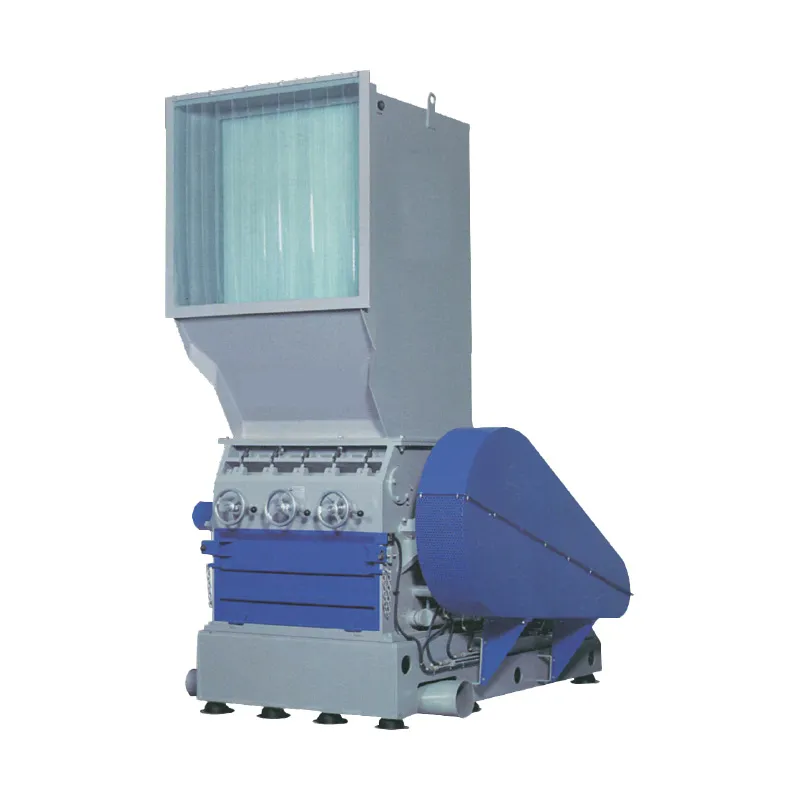
Versatile plastic crusher for all types of plastic crushing applications. Produces uniform 6-20mm regrind with interchangeable screen mesh. Available in 6 models from 11kW to 45kW with flat blade design.
The ZPC Series is a universal plastic crusher granulator for secondary size reduction after shredding. A flat paddle rotor cutting against 2-6 stationary blades runs at 580-650 RPM on an 11-45 kW motor, and an interchangeable 6-20 mm screen produces 150-1000 kg/h of regrind. It is the standard step for PET bottles, injection scrap, sheet and pipe offcuts that must be sized for washing, pelletising or pulverising, and in some markets the same machine class is listed as a granulator or plastic regrind machine.
Technical Specifications
| Model | ZPC-500 | ZPC-600 | ZPC-700 | ZPC-800 | ZPC-1000 | ZPC-1200 |
|---|---|---|---|---|---|---|
| Motor Power | 11 kW | 15-18.5 kW | 18.5-22 kW | 22-30 kW | 30-37 kW | 37-45 kW |
| Rotor Speed | 580-650 RPM | |||||
| Blade Type | Flat (Paddle) Type — SKD-11 | |||||
| Rotor Blades | 9 pcs | 12 pcs | 15 pcs | 18 pcs | 21 pcs | 24 pcs |
| Stationary Blades | 2 pcs | 2 pcs | 3 pcs | 4 pcs | 4 pcs | 6 pcs |
| Screen Mesh | 6-20 mm (Interchangeable) | |||||
| Throughput | 150 kg/h | 200 kg/h | 300 kg/h | 300-500 kg/h | 500-700 kg/h | 700-1000 kg/h |
Universal Plastic Crusher ZPC Series
The ZPC series universal crusher granulator is designed for comprehensive plastic crushing applications. Its flat-blade rotor design delivers clean, uniform regrind across a wide variety of thermoplastic materials from soft films to rigid containers. With 6 model sizes and interchangeable screen mesh, it adapts to diverse production requirements.
Key Features
- Flat paddle-type blade geometry for versatile material handling
- SKD-11 hardened steel blades with reversible cutting edges for extended life
- Quick-release screen for easy mesh changes between material types
- Belt-driven rotor with shock-absorbing pulley system for smooth operation
- Adjustable stationary blades for maintaining optimal cutting clearance (0.3-0.5mm)
- Compact footprint for space-constrained production floors
- Optional soundproof hopper and vacuum loading system
Processing Materials
All types of waste plastics including PET bottles, PE/PP films and bags, PVC pipes and profiles, HDPE containers, injection molding sprues and runners, blow molding bottles, sheet edge trim, general plastic scrap.
Applications
Injection and blow molding in-line recycling, film and bag recycling, PET bottle crushing, general plastic scrap processing, small-to-medium recycling operations.


What a Granulator Does That a Shredder Cannot
A crusher works at speed — 580–650 RPM on the ZPC — and cuts against a screen, so the product is a controlled regrind rather than a torn flake. Flat paddle-type SKD-11 blades shear cleanly, which is what produces the uniform particle shape extruders and injection machines need. Screen mesh between 6 and 20 mm sets the size, and screens are interchangeable.
The machine expects feed that a shredder has already broken down. Whole parts, thick-walled pipe and purgings belong upstream; putting them straight into a granulator overloads the rotor and damages the screen.
Position in the Line
The ZPC is the second stage. It takes 40–100 mm flake from a single shaft shredder or a double shaft shredder and reduces it to the 6–20 mm regrind that processing equipment accepts. Where the target is powder, regrind goes on to a disc pulverizer for the final grind.
Many plants run the ZPC as a standalone machine for in-house scrap — sprues, runners, rejected mouldings — which is the simplest and most common recycling setup there is.
Selecting a Model
Rated throughput runs from 150 kg/h on the ZPC-500 to 700–1,000 kg/h on the ZPC-1200, with motor power from 11 kW to 37–45 kW. Rotor blade count rises from 9 to 24 across the range and stationary blades from 2 to 6, which is what lets the larger machines hold a consistent cut at higher rates.
Choose the screen first, then the model. A machine asked to produce 6 mm regrind will not reach the throughput it achieves at 20 mm — screen area is the limiting factor, not motor power.
Operating Notes
Flat blades are the right choice for general-purpose regrind and are easier to maintain than claw types, but they need sharp edges to cut rather than hammer. Dull knives raise power draw and generate fines and heat instead of clean granules. Blade gap setting matters as much as blade sharpness: too large a gap produces oversize and re-circulation, too small risks knife contact.
Screen condition drives both product quality and throughput. A damaged or blocked screen shows up first as rising amperage and hotter discharge.
Related Reading
Frequently Asked Questions
It is a secondary machine, designed for shredder flake rather than whole parts. Feed it material that has already been reduced — roughly 40–100 mm flake — and it will cut cleanly. Whole mouldings, thick-walled pipe and purgings should go through a shredder first.
By the screen, which is interchangeable across 6–20 mm. Material stays in the cutting chamber until it passes the screen, so the screen aperture is the particle size. Finer screens reduce throughput because the material recirculates longer.
Flat (paddle) blades shear and produce a uniform granulate, which suits general-purpose regrind of injection and extrusion scrap. Claw blades grip and fracture hard, thick-walled stock. The ZPC uses flat blades; the ZPC-HD uses claw blades for heavy section material.
From 150 kg/h on the ZPC-500 up to 700–1,000 kg/h on the ZPC-1200, assuming rigid material and a mid-range screen. Fine screens and soft or film-type feed reduce those figures.
Blades are sharpened and re-set rather than discarded, and the interval depends on what you run — clean in-house sprues are gentle, glass-filled or mineral-loaded compounds are not. Rising motor current and hotter, dustier discharge are the practical signals that the knives have gone dull.
Yes. In-house scrap regrind — sprues, runners, rejected mouldings — is the most common standalone application, and it needs no shredder upstream because the parts are already small enough to feed.
Related Products
Interested in This Machine?
Tell us your material type, desired throughput, and output size — our team will provide a tailored recommendation and quotation.