
 1 / 1
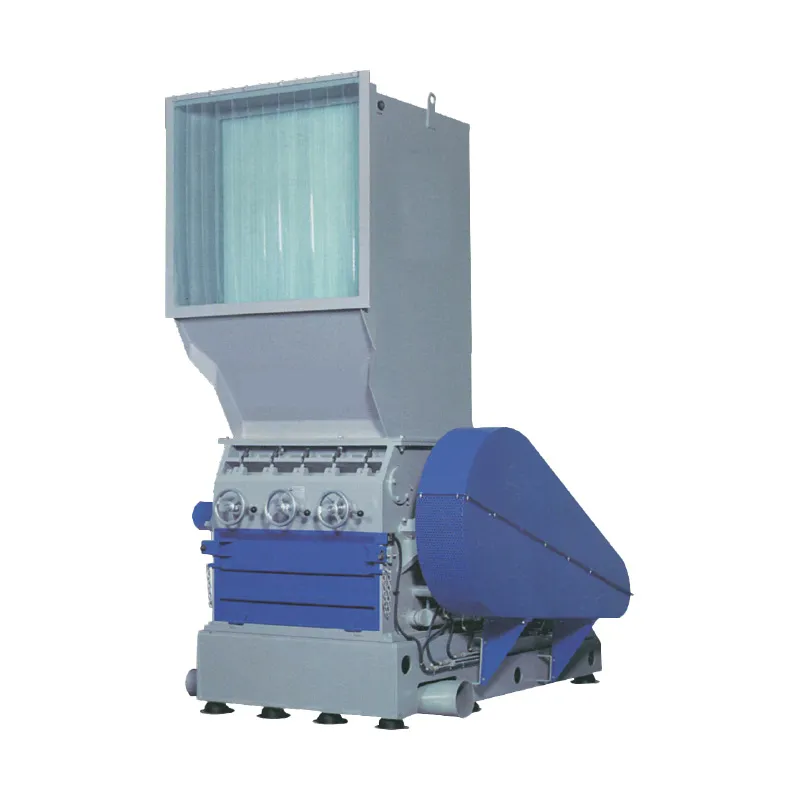
Heavy Duty Plastic Crusher
Powerful heavy-duty crusher with claw-type blades for thick-walled PVC, PE, PP pipes, WPC profiles, and engineering plastics. 5 models from 45kW to 132kW for high-volume industrial recycling operations.
The ZPC-HD Series is a heavy-duty plastic crusher fitted with a claw (prong) type rotor for thick-walled and mineral-filled scrap. The 45-132 kW drive turns 15 to 30 rotor blades at 500-580 RPM inside a cutting chamber up to 1600×1000 mm, and an 8-20 mm screen yields 700-2200 kg/h. It is the usual choice for rigid PVC pipe and profile, WPC, PC sheet and other thick-section industrial scrap where a flat-blade granulator would stall or wear too quickly.
Technical Specifications
| Model | ZPC-HD800 | ZPC-HD1000 | ZPC-HD1200 | ZPC-HD1400 | ZPC-HD1600 |
|---|---|---|---|---|---|
| Motor Power | 45-55 kW | 55-75 kW | 75-90 kW | 90-110 kW | 110-132 kW |
| Rotor Speed | 500-580 RPM | ||||
| Blade Type | Claw (Prong) Type — SKD-11 | ||||
| Screen Mesh | 8-20 mm (Interchangeable) | ||||
| Throughput | 700-800 kg/h | 800-1200 kg/h | 1000-1500 kg/h | 1200-2000 kg/h | 1600-2200 kg/h |
| Cutting Chamber | 800×600 | 1000×700 | 1200×800 | 1400×900 | 1600×1000 mm |
| Rotor Blades | 15 pcs | 18 pcs | 21 pcs | 24 pcs | 30 pcs |
Heavy Duty Plastic Crusher ZPC-HD Series
The ZPC-HD series heavy duty crusher features a robust claw-type blade rotor system delivering powerful impact crushing for rigid, thick-walled plastic materials. Engineered for 24/7 industrial operation, it produces uniform regrind ideal for direct feed back into extrusion and injection molding lines or as pre-ground feed for pulverizers.
Key Features
- Claw-type rotor blade design for maximum impact force on tough, rigid materials
- SKD-11 hardened steel blades with reversible cutting edges for extended service life
- Adjustable stationary blades with precision gap control for optimal cutting
- Interchangeable screen mesh for controlled output particle size (8-20mm)
- Heavy-duty welded steel construction with vibration-dampening mounts
- Overload protection with automatic reverse and thermal motor cutoff
- Optional soundproof enclosure and automatic feeding conveyor systems
Processing Materials
PVC pipes and profiles, HDPE and PP thick-walled pipes, WPC composite products, EVA foam and sheet, PE and PP rigid containers, injection molding purgings and reject parts, engineering plastics (ABS, PC, PA).
Applications
PVC pipe and profile manufacturers, WPC/SPC flooring factories, large injection molding operations, plastic pallet and crate recycling, construction material recycling.

What Makes It Heavy Duty
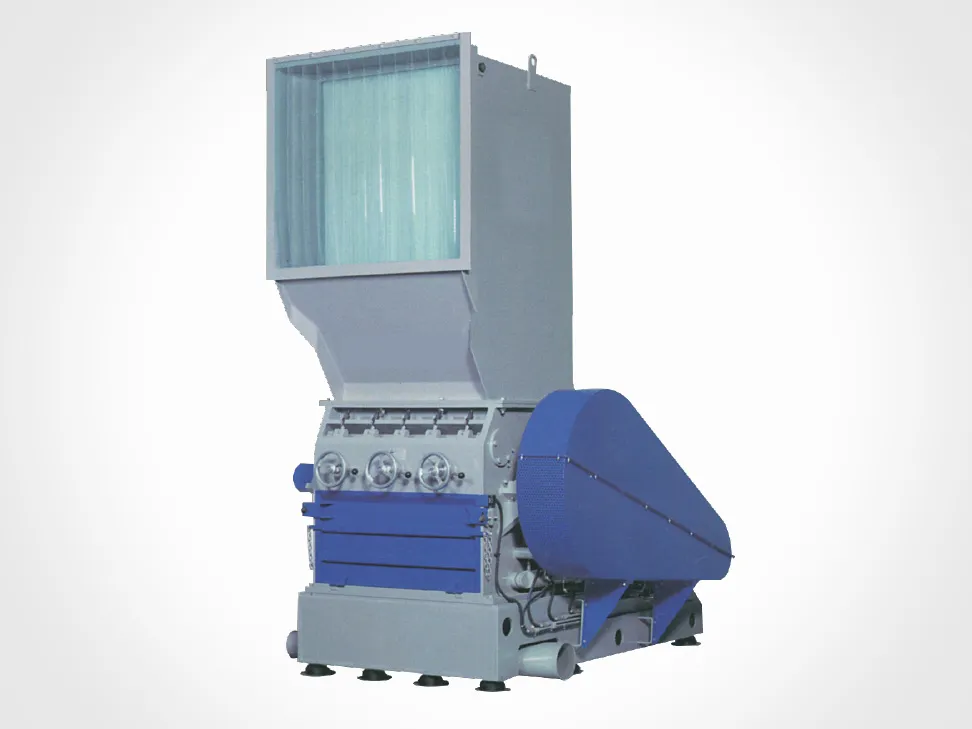
Two things: claw-type knives and a large cutting chamber. Claw blades grip and fracture material that flat blades would skate over — thick-walled PVC and HDPE pipe, large profiles, sheet offcuts and heavy purgings. Cutting chambers run from 800 × 600 mm on the ZPC-HD800 to 1600 × 1000 mm on the ZPC-HD1600, so the rotor can take stock that a standard granulator would reject outright.
Speed is lower than the universal series — 500–580 RPM — because the machine is cutting thick sections and needs torque rather than tip speed. Screens cover 8–20 mm.
Position in the Line
The ZPC-HD is the second stage in lines handling heavy material: it takes 40–150 mm flake from a ZDS-HD double shaft shredder and reduces it to 8–20 mm. From there the regrind either goes to extrusion or, for powder, to a vertical disc pulverizer.
Pipe recyclers often run the pair — shredder plus heavy duty crusher — as a fixed installation, because pipe is the one feedstock that reliably defeats lighter machines.
Selecting a Model
Throughput runs from 700–800 kg/h on the ZPC-HD800 to 1,600–2,200 kg/h on the ZPC-HD1600, with motor power from 45–55 kW to 110–132 kW and rotor blades from 15 to 30. The deciding dimension is the cutting chamber: it has to accept your largest piece. Motor power only matters once the chamber can physically take the stock.
Screen choice follows the downstream process. Extrusion feed is usually produced at the coarse end of the 8–20 mm range; finer settings raise power consumption and heat for no benefit unless the next stage requires it.
Operating Notes
Claw blades hold an edge longer on thick-section material than flat blades do, but they are less tolerant of a wrong gap setting — the prongs are the working geometry, and re-grinding changes it. Re-setting blade gap after every sharpening is not optional.
Heavy duty machines draw serious current on start-up and under load. Plants running several together usually stagger the start sequence rather than starting them simultaneously.
Related Reading
Frequently Asked Questions
When the material is thick-section and hard to grip: pipe with substantial wall thickness, large profiles, sheet, heavy purgings. Claw knives and the larger cutting chamber exist to handle stock that flat blades cannot bite. For general sprues and thin-walled mouldings, the standard ZPC is the cheaper and faster machine.
That is set by the cutting chamber, from 800 × 600 mm on the ZPC-HD800 to 1600 × 1000 mm on the ZPC-HD1600. Size the chamber to the biggest item in your stream; anything larger will bridge or stall the rotor regardless of motor power.
8–20 mm, set by an interchangeable screen. Coarser settings suit extrusion feed and give higher throughput; finer settings increase residence time, heat and power draw.
The HD series runs higher throughput on heavy stock — 700–800 kg/h at ZPC-HD800 up to 1,600–2,200 kg/h at the ZPC-HD1600 — because claw knives and a larger chamber keep feeding. On light, thin-walled material the universal ZPC is usually faster per kilowatt.
They are re-ground rather than replaced, but the prong geometry is the cutting action, so blade gap must be re-set after every sharpening. Skipping that step is the usual cause of poor cut quality and knife contact after maintenance.
For pipe and heavy section material, yes. The shredder takes whole lengths down to 40–150 mm flake, which the ZPC-HD then cuts to 8–20 mm. Feeding whole pipe directly into any granulator is the fastest way to damage a screen and a rotor.
Related Products

Interested in This Machine?
Tell us your material type, desired throughput, and output size — our team will provide a tailored recommendation and quotation.