
 1 / 1
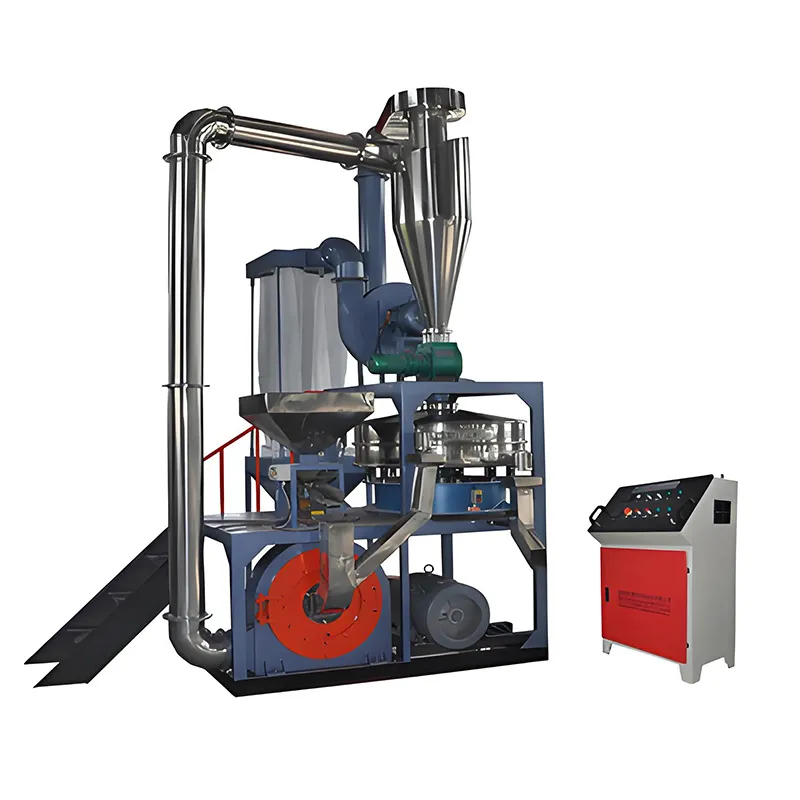
MF Series Vertical Disc PE Plastic Pulverizer
Vertical disc pulverizer for PE (LLDPE/LDPE/MDPE/HDPE), PVC, PP, ABS, PA, EVA, PET, PS, EPS, PC and more. Disc diameter 400-800mm, capacity 50-1200 kg/h. Ideal for rotational molding powder production and plastic recycling.
The MF Series is a vertical disc PE plastic pulverizer with an integrated vibration screen classifier, built mainly for rotational moulding powder. Disc diameter ranges from 400 to 800 mm with 22-110 kW of main motor power, and fineness is adjustable from 10 to 120 mesh by screen and plug bolt at 50-1200 kg/h from a feed of 10 mm or less. Apart from PE rotomoulding grades it handles PVC, PP, ABS, PA, EVA and PS, and the same machine is listed as a PE grinding mill or plastic powder mill.
Technical Specifications
| Model | MF-400 | MF-500 | MF-600 | MF-800 |
|---|---|---|---|---|
| Disc Diameter | 400 mm | 500 mm | 600 mm | 800 mm |
| Main Motor | 22 kW | 37 kW | 45-55 kW | 75-110 kW |
| Capacity | 50-300 kg/h | 80-500 kg/h | 120-800 kg/h | 200-1200 kg/h |
| Feed Size | ≤ 10 mm (crusher regrind or granules) | |||
| Output Fineness | 10-120 mesh (adjustable via screen + plug bolt) | |||
| Disc Type | Vertical disc mill with vibration screen classifier | |||
| Cooling System | Water-cooled jacket on grinding chamber | |||
| Applicable Materials | PE, PVC, PP, ABS, PA, EVA, PET, PS, PPS, EPS, PC, foam, leather | |||
| Note | Output varies with material properties, feed size, and required powder fineness | |||
MF Series Vertical Disc PE Plastic Pulverizer
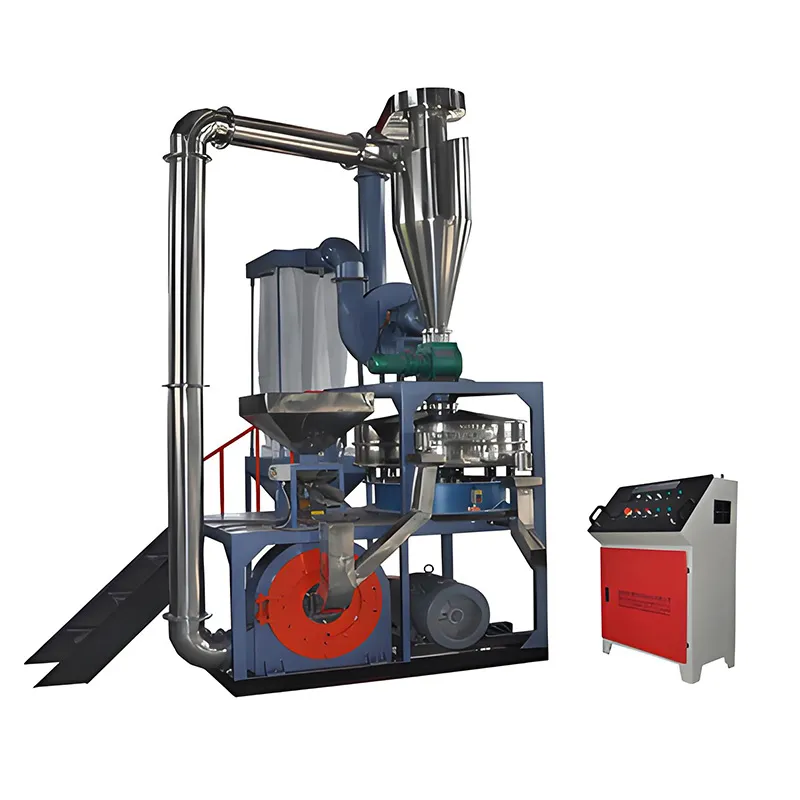
The MF series is a new-generation vertical disc pulverizer with disc diameters ranging from 400 mm to 800 mm, belonging to the disc-type pulverizer family. It is designed for processing materials of moderate hardness and impact sensitivity, including PE, PVC, PP, ABS, Nylon (PA), EVA, PET, PS, PPS, EPS, PC, foam and leather materials. A vibrating screen is integrated to ensure uniform powder fineness, which is critical for downstream applications.
One of the primary applications of the MF series plastic pulverizer is PE powder preparation for the rotational molding industry. In this process, the vibrating screen system is essential for sieving out consistently fine and uniform powder.
Key Features
- Wide material compatibility — processes PE, PVC, PP, ABS, PA, EVA, PET, PS, PPS, EPS, PC, foam, and leather, providing maximum production flexibility.
- Vertical disc design — optimized grinding chamber geometry with vertical disc surface for efficient shearing action and reduced material surging.
- Integrated vibrating screen classifier — ensures uniform particle size distribution for consistent powder quality, critical for rotational molding and compounding.
- Water-cooled jacket — prevents thermal degradation of heat-sensitive materials during extended grinding operations.
- Adjustable grinding gap — plug bolt adjustment enables fine-tuning of output fineness from 10 to 120 mesh without replacing components.
- 4-model scalability — from MF-400 (22 kW, 50-300 kg/h) to MF-800 (75-110 kW, 200-1200 kg/h) to match any production scale.
- Sealed operation — fully enclosed milling process with cyclone separation for clean, dust-controlled working environment.
- Low power consumption — efficient disc geometry design delivers high throughput at lower energy cost per kilogram of output.
Applications
- Rotational molding powder production — produces fine, uniform PE powder for rotomolding of water tanks, kayaks, playground equipment and industrial containers.
- Plastic refinement recycling — grinding post-industrial and post-consumer plastic scrap into reusable fine powder.
- Engineering plastics compounding — preparing base powders for color masterbatch, filler masterbatch and additive compounding.
- Extrusion plastic recycling — recycling regrind from extrusion scrap into powder for re-extrusion processes.
- Composite plastic production — grinding base materials for WPC, SPC and other composite formulations.
- Pipe and sheet crushing recycling — converting crushed pipe and sheet offcuts into fine powder for closed-loop recycling.
Processing Materials
PE (LLDPE, LDPE, MDPE, HDPE), PVC (rigid and soft), PP, ABS, PA (Nylon 6, Nylon 66), EVA, PET bottle flake and regrind, PS, PPS, EPS, PC scrap, foam (PU, EPE), leather and textile industry waste.
Why Choose Zhiyi Machine
- 15+ years of engineering experience in plastic size reduction equipment
- CE certified, ISO 9001 quality management system
- Pre-shipment full-load testing on every machine
- Global after-sales support and spare parts supply
- 100+ countries and regions served worldwide
Feed and Fineness
Like the MPD, the MF series is a finishing mill that wants feed of 10 mm and below — crusher regrind or granules. It reaches it via a granulator downstream of a shredder in a three-stage line.
The distinguishing specification is the fineness range: 10–120 mesh, controlled by the screen and the plug bolt together. That lower bound matters. Rotomoulding and some masterbatch applications want a coarser, more controlled powder than a 60-mesh floor allows, and the MF covers ground the MPD does not.
Material coverage includes PE (LLDPE, LDPE, MDPE, HDPE), PVC, PP, ABS, PA, EVA, PET, PS, PPS, EPS, PC, foam and leather.
Classifying and Cooling
A vibration screen classifier sits on the discharge side, so oversize material is separated and returned rather than passed into the product. That is what keeps the particle size distribution tight — important for rotational moulding, where powder consistency affects how the material flows and fuses in the mould.
The grinding chamber is water-jacketed. PE in particular generates heat quickly, and a cooled chamber is what keeps the powder from agglomerating.
Selecting a Model
Capacity spans 50–300 kg/h on the MF-400 to 200–1,200 kg/h on the MF-800, with disc diameters from 400 to 800 mm and main motors from 22 kW to 75–110 kW. Note that the range quoted for each model is wide, because output depends on material properties, feed size and the fineness you are asking for. Specify all three when sizing; a capacity figure quoted in isolation is not a commitment.
Screen selection is the first decision, not the last. It sets both the top of the fineness range and the achievable rate.
Operating Notes
Because the screen and the plug bolt both influence fineness, they should be adjusted together and deliberately. Changing one without the other is the usual reason powder quality becomes inconsistent after maintenance.
Disc condition shows up in the product before it shows up in the amperage — a widening particle size distribution or a rise in coarse fraction generally means the disc has worn, not that the setting has drifted.
Related Reading
Frequently Asked Questions
Fineness range and classification. The MF covers 10–120 mesh using a screen plus plug bolt, and it adds a vibration screen classifier on discharge. The MPD runs 60–150 mesh with plug bolt adjustment and a cyclone-based sealed system. Where you need coarser, tightly classified powder — rotomoulding is the common case — the MF is the better fit.
Around 10 mesh at the coarse end of the range, which is coarser than most disc mills can hold. Fineness is controlled by the screen and the plug bolt working together.
10 mm and below. Crusher regrind or granules — the output of a granulator, not a shredder. Feeding coarse flake overloads the disc and gives inconsistent fineness.
It separates oversize particles at discharge and returns them for re-grinding instead of letting them into the product. The result is a tighter particle size distribution, which matters most in rotational moulding, where powder flow and fusion in the mould depend on consistency.
PE generates heat quickly under grinding. Without cooling, the powder softens and agglomerates, and the grind becomes uneven. The water jacket keeps the chamber at a temperature where the material still cuts.
Published ranges run from 50–300 kg/h on the MF-400 to 200–1,200 kg/h on the MF-800. Those are ranges, not fixed figures — actual output depends on material, feed size and the fineness you specify. Give all three when requesting a quotation.
Related Products

Interested in This Machine?
Tell us your material type, desired throughput, and output size — our team will provide a tailored recommendation and quotation.