
What Throughput to Expect from an Industrial Plastic Shredder
The Short Answer: Typical Ranges by Machine Class
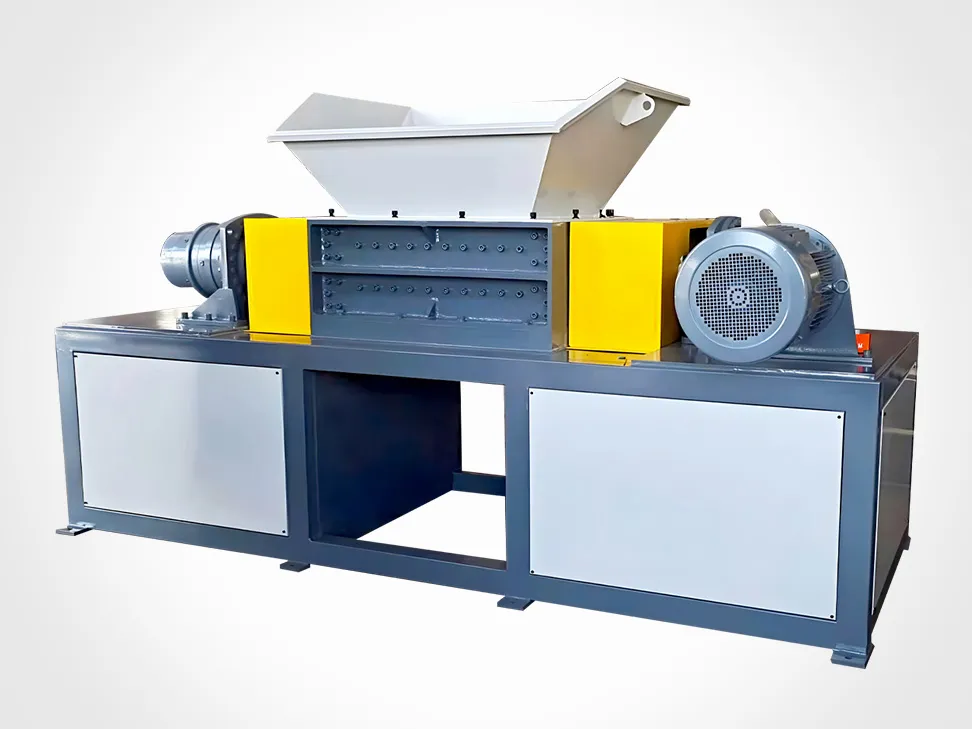
Throughput on an industrial plastic shredder is quoted in kilograms per hour, and the honest answer depends less on the model badge than on what you feed it. Published ranges from working machinery give a useful starting band:
| Machine class | Motor power | Screen | Published output |
|---|---|---|---|
| Screen-controlled shredder (entry) | 7.5–15 kW | Φ10–12 mm | 300–700 kg/h |
| Screen-controlled shredder (mid) | 22–37 kW | Φ12 mm | 600–1,600 kg/h |
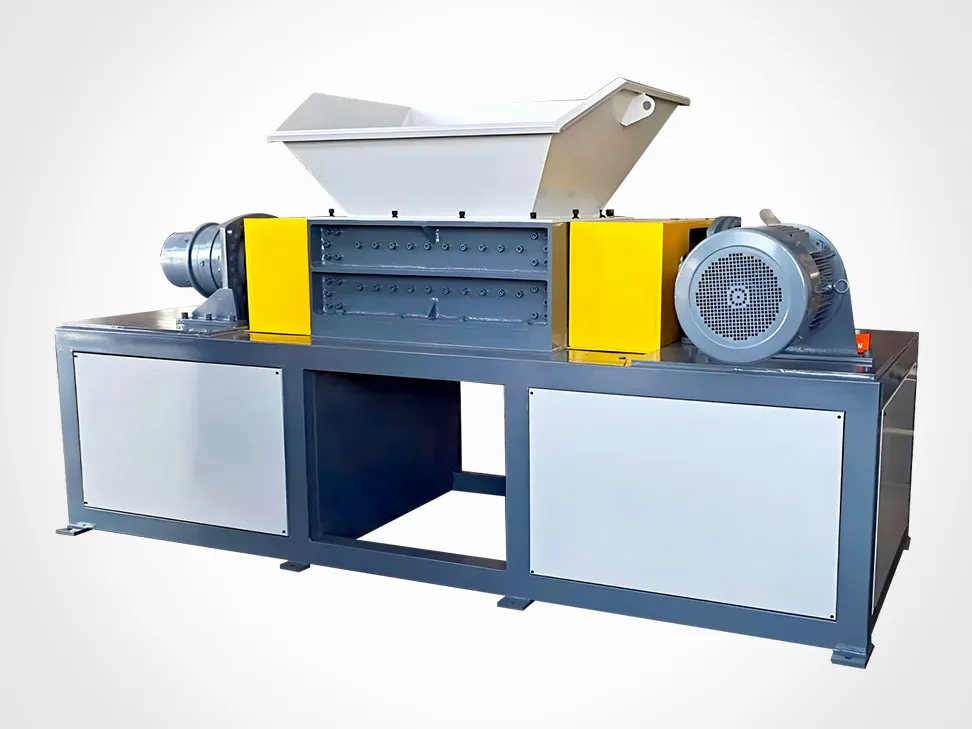
| Single-shaft, low speed high torque | 15–45 kW | 12–40 mm | 80–800 kg/h |
| Single-shaft, rigid scrap duty | 30–132 kW | 50–120 mm | 300–2,500 kg/h |
| Four-shaft (light / medium / heavy) | 30–110 kW | 20–150 mm | 500–7,000 kg/h |
Those numbers are measured under favourable conditions: a named material, a stated screen, fresh blades and steady feed. Change any of those and the real figure moves — sometimes by half.
Why the Spec Sheet Number Is Not What You Get
A machine rated 1,000 kg/h that delivers 600 kg/h on your floor is not defective. Both numbers can be true. The rated figure assumes ideal, consistent feedstock; your material is lighter, bulkier, harder, or you are asking for finer flake through a smaller screen than the rating assumed.
The biggest single reason is bulk density. A shredder moves a certain volume per hour, so light, bulky material produces a low weight-per-hour even when the chamber is completely full. Loose LDPE film sits around 30 kg/m³ where rigid HDPE regrind is closer to 350 kg/m³. A shredder rated 1,000 kg/h on rigid HDPE can drop to roughly 400 kg/h on loose film without anything being wrong with the machine. Part shape matters the same way: rigid hollow parts such as bottles and containers tend to bounce and bridge over the rotor instead of feeding, which is why those applications need a tangential infeed or a hydraulic ram to drive material into the knives.
The Correction Factors That Decide Your Real Number
Throughput is not one variable — it is a chain of multipliers applied to the reference rating. Published correction factors from reference conditions look like this:
| Condition | Reference | Actual condition | Multiplier |
|---|---|---|---|
| Bulk density | Baled, above ~250 kg/m³ | Loose film or hollow parts, below 60 kg/m³ | 0.45–0.65 |
| Bulk density | Baled, above ~250 kg/m³ | Loose rigid packaging, 80–150 kg/m³ | 0.70–0.85 |
| Moisture | Dry, below 3% | Wet, 10–25% surface moisture | 0.80–0.92 |
| Blade condition | Freshly indexed edge | End-of-life edge, overdue for indexing | 0.70–0.82 |
| Screen aperture | 60 mm | 40 mm | 0.85 |
| Screen aperture | 60 mm | 30 mm | 0.72 |
| Feeding method | Hydraulic ram with load-following control | Gravity feed, manual loading | 0.55–0.75 |
| Contamination | Sorted, under 2% foreign material | Unsorted, 5–10% foreign material | 0.75–0.90 |
The multipliers combine, and that is where capacity plans go wrong. A machine rated at 1,500 kg/h, fed loose low-density film by gravity, running a 40 mm screen with mid-life blades, produces roughly:
1,500 × 0.55 × 0.65 × 0.85 × 0.92 ≈ 420 kg/h
That is not a faulty machine — it is four independent specification decisions each taking a share of the capacity. Correcting the two largest factors, by baling the feed and adding ram control, roughly doubles output without changing the machine at all.

Screen Size Is a Direct Throughput Lever
The discharge screen is the gatekeeper. Material stays in the chamber until it is small enough to pass, so smaller perforations mean more cutting passes and lower hourly output. On tough materials the recirculation rate — the share of material that fails to pass on the first attempt — can run as high as 60–70%, meaning the machine is effectively processing the same material several times over.
In practice, a finer screen can cut throughput by close to half. If your process can accept a coarser flake, real capacity rises without touching the machine. Choose the screen to match the flake size your buyer or downstream process needs, then size the machine to hit your volume at that screen.
How to Size the Machine You Actually Need
Work backwards from your own numbers rather than forwards from a catalogue rating:
- Divide your daily tonnage by your real running hours to get the required rate.
- Divide that by a material factor — roughly 0.3–0.5 for low-density film, 0.6–0.8 for clean dense rigid scrap — to get the rated capacity you should be buying.
- Add 15–20% headroom for material variation and blade wear.
Cross-check the result against energy. Shredding mixed plastic waste typically consumes 15–25 kWh per tonne, so 2 tonnes per hour needs 30–50 kW of installed motor power before margin — and you should add around 20% on top for material variation and blade dulling. A simpler field rule: allow 1 kW per 5–8 kg/h on rigid plastics, and 1 kW per 10–15 kg/h on flexible or low-density material.
Throughput Does Not Stop at the Shredder
A shredder is the first stage, and thinking about its output in isolation is how lines get unbalanced. In a typical rigid plastic line the chain runs shredder → crusher or granulator → washing → drying → extrusion, with a pulverizer added where the product is powder rather than flake.
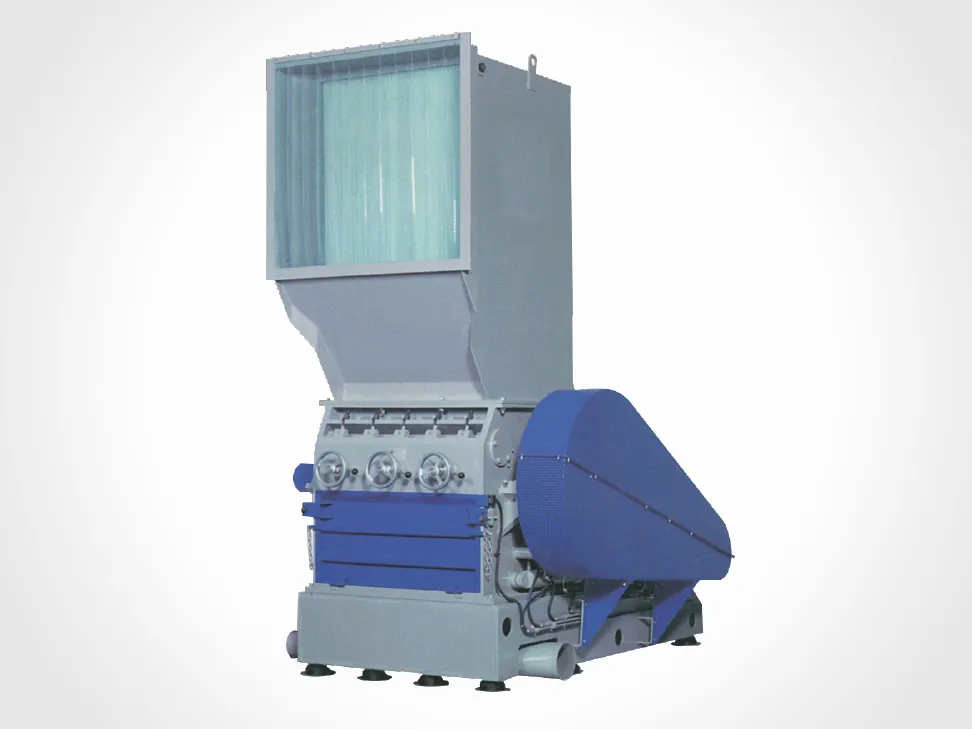
Each stage has its own band: a single-shaft shredder commonly runs 500–3,000 kg/h down to 30–80 mm, while the granulator behind it typically handles 300–2,000 kg/h at 22–110 kW down to 8–14 mm flake. Where the line ends in powder, the pulverizer sets a third, usually lower, ceiling — and PVC in particular runs more slowly than polyolefin because it degrades above 200 °C and needs the cooling circuit working properly.
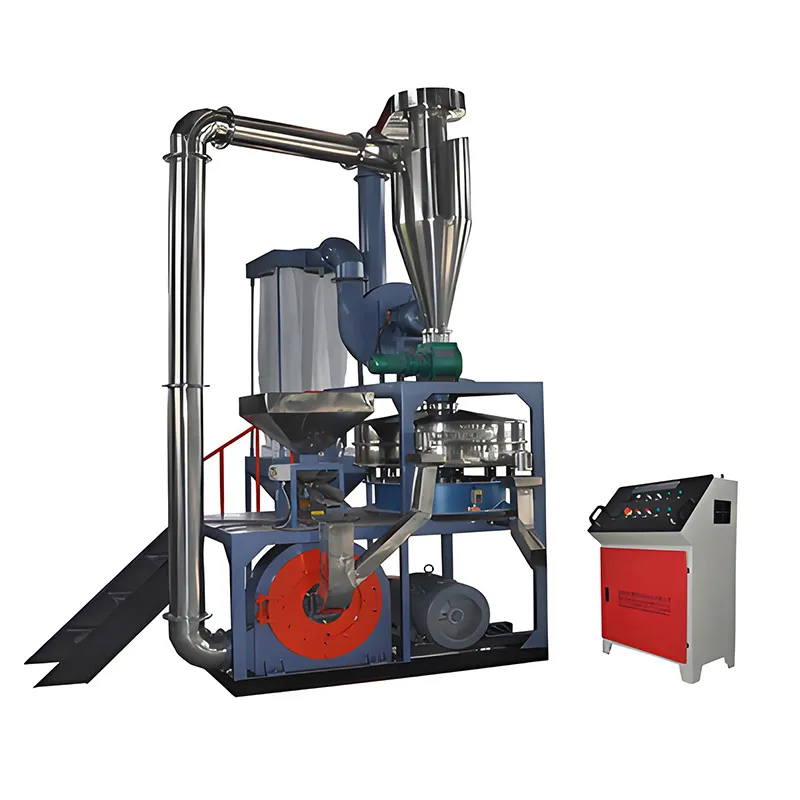
The rule that prevents most bottlenecks: size each downstream stage 15–20% above the one feeding it. A 1,000 kg/h shredder paired with a 600 kg/h granulator backs up within the hour and puts the load onto the granulator rotor bearing. The throughput of the line is the throughput of its slowest stage, so the number to plan around is never the shredder's rating alone.
Five Qualifiers to Demand With Any Throughput Guarantee
- A named material, not "plastic".
- A stated bulk density.
- A stated moisture content.
- A stated screen aperture.
- A stated blade condition.
A throughput number offered without those five qualifiers is not a guarantee — it is a figure both parties will interpret differently at the acceptance test. Where the material is difficult, ask for a test run on your own feedstock: it settles bulk density, feed behaviour, resin hardness and screen choice in one pass.
References
- ZERMA America — rated versus real throughput, bulk density and screen effects.
- Polyretec — throughput correction factors for bulk density, moisture, blade condition, screen aperture, feeding method and contamination.
- ARZIR / HARSLE — four-shaft shredder parameters, recirculation rate and specific energy consumption.
- SLECOTECH — shredder capacity planning and material factors.
- YUXI, Rumtoo and Weplas — published single-shaft and screen-controlled shredder model ranges.
Frequently Asked Questions
What throughput can I expect from an industrial plastic shredder?
Most single-shaft machines fall between 300 and 2,500 kg/h depending on motor power and screen size, while four-shaft units run from 500 up to 7,000 kg/h. The published figure assumes favourable material and steady feed — apply correction factors for bulk density, screen size, blade condition and feeding method to get your real number.
Why is my shredder producing less than its rated capacity?
Almost always the material. If your feed is lighter, bulkier or harder than the rating assumed, or you are running a finer screen than the test condition, weight-per-hour drops. Worn cutters and unsteady feeding have the same effect.
How much does screen size affect throughput?
Significantly. Moving from a 60 mm screen to 40 mm typically costs around 15% of output, and to 30 mm around 28%. On tough materials a finer screen can reduce throughput by close to half, because material must stay in the chamber for more cutting passes.
How do I calculate the shredder capacity I need?
Divide your daily tonnage by real running hours, then divide by a material factor — about 0.3–0.5 for low-density film, 0.6–0.8 for clean dense rigid scrap. Add 15–20% headroom, and cross-check against energy use of 15–25 kWh per tonne.
Does shredder throughput affect the crusher and pulverizer downstream?
Yes. The line runs at the speed of its slowest stage. Size each downstream machine 15–20% above the one feeding it, otherwise the crusher backs up and the pulverizer starves or overloads depending on where the mismatch sits.