
How to Choose the Right Plastic Shredder for HDPE, PP and PVC Recycling
Why HDPE, PP and PVC Do Not Shred the Same Way
HDPE, PP and PVC make up most of the rigid plastic waste moving through a recycling yard, but they do not behave the same once they hit the rotor. HDPE drums, pipe and crates are tough, ductile and abrasive on the cutting edges. PP sits close to HDPE but runs a little gentler. PVC is brittle and, when cut, releases hydrogen chloride. Run all three on one fixed setting and you get premature blade wear, excess fine dust on PVC, or oversized chunks that stall the crusher sitting downstream. This guide covers how to match a shredder — and the crusher and pulverizer that follow it — to each of these three resins.
What a Plastic Shredder Does Before the Crusher
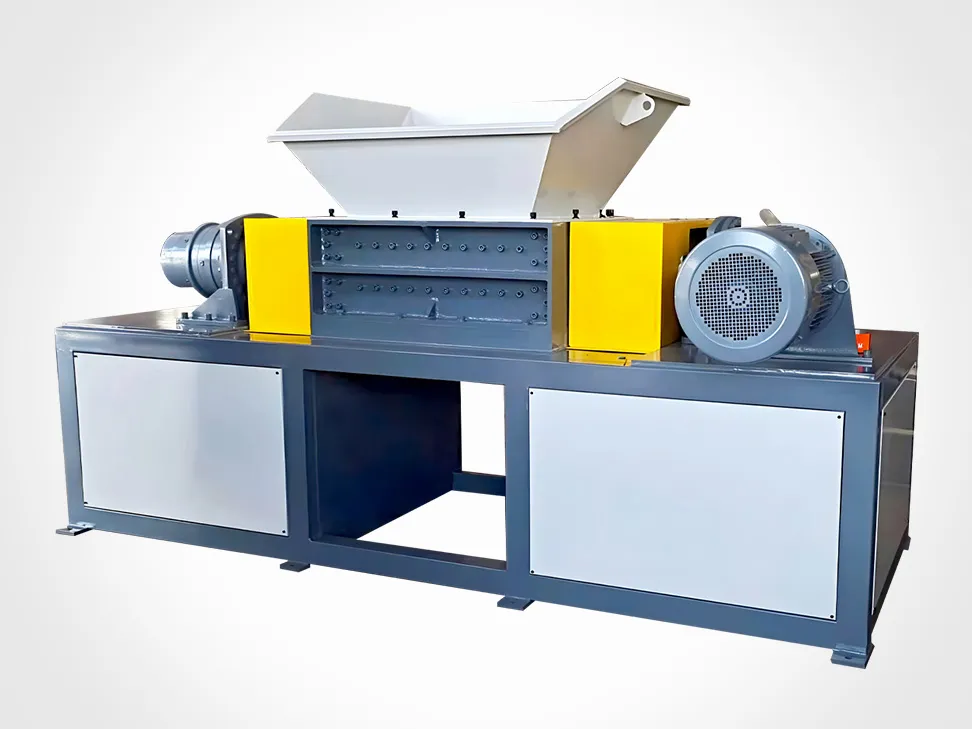
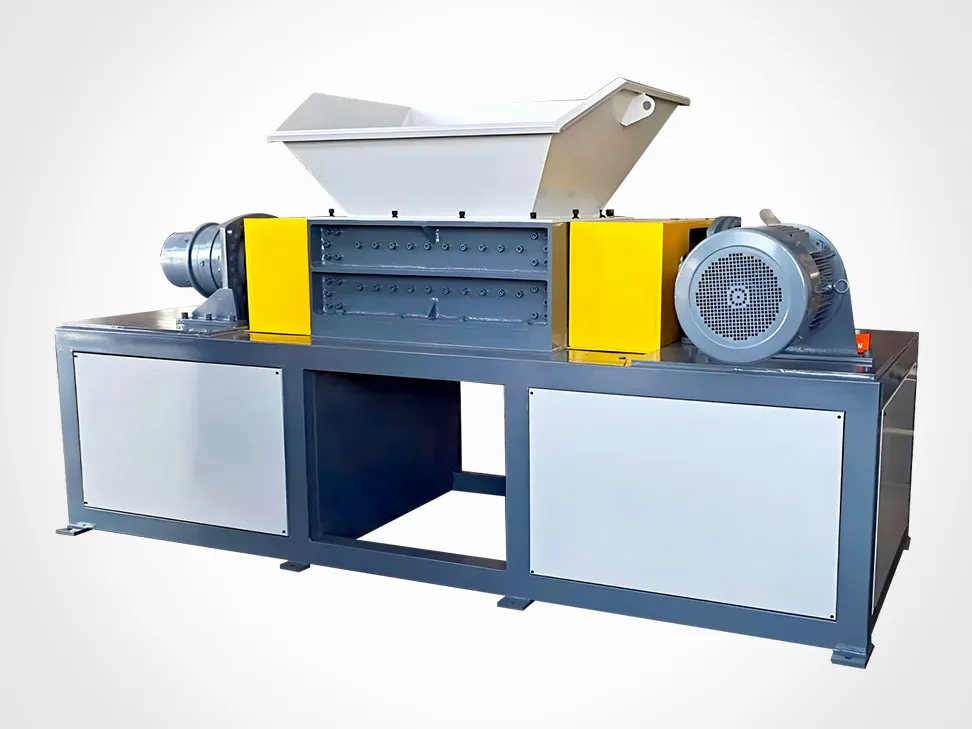
A shredder is the first size-reduction stage. A single-shaft unit pushes material against a rotating rotor with a hydraulic ram, shears it against fixed counter-knives, and sizes the output through a screen beneath the rotor. Typical rotor speed is 45–100 rpm and output lands at 30–80 mm. A twin-shaft (double-shaft) unit uses two intermeshing rotors turning at low speed and high torque, usually without a screen, producing coarse 50–150 mm pieces for bulky or rigid feed.
ACERETECH's MS single-shaft series is a useful reference point: a 460 mm rotor running at 74 rpm, a 40–100 mm screen, and DC53 blades at 62–64 HRC — roughly twice the toughness of standard D2/SKD11 steel. Those numbers are what "industrial grade" means in practice, not the peak throughput printed on a brochure.

HDPE, PP and PVC Cut Differently
HDPE — drums, pipe, crates, pallets
Tough, ductile and abrasive. Configure a heavy-duty open rotor, allow 200–350 rpm on the following granulator, and pre-shred any piece wider than 500 mm. Blades should be D2 or SKD-11; on clean HDPE they deliver 8,000–12,000 operating hours before re-grinding.
PP — containers, caps, sheets, automotive parts
Mechanically close to HDPE but slightly less abrasive: blade service life runs 10–15% longer. Use the same rotor and blade specification as HDPE. No special handling is required beyond what HDPE already demands.
PVC — pipe, profiles, blister, conduit
Brittle and rigid. Two rules govern the setup. First, drop rotor speed 25–35% below the HDPE setting to avoid excess fines. Second, fit dust extraction — cutting PVC releases hydrogen chloride that damages both operators and machine internals. Use SKD-11 or tungsten-carbide-tipped blades; standard D2 wears 2–3× faster on PVC, and throughput on the same machine runs 25–35% below HDPE. PVC also degrades above 200 °C and gives off HCl, so the entire downstream line, extruder included, needs corrosion-resistant and vented equipment.
| Resin | Rotor configuration | Blade grade | Output size | Dust extraction | Relative throughput |
|---|---|---|---|---|---|
| HDPE | Heavy-duty open rotor; pre-shred >500 mm | D2 / SKD-11 | 40–100 mm shred → 8–14 mm crush | Optional | 100% (baseline) |
| PP | Same as HDPE | D2 / SKD-11 | Same sizes | Optional | ~100–110% |
| PVC | Rotor speed −25–35% | SKD-11 / tungsten carbide | Same sizes | Mandatory | 65–75% |
Single-Shaft or Twin-Shaft for Your Feed?
Choose a single-shaft shredder when you need controlled, uniform output that feeds the next stage cleanly. The screen sets the flake size and the hydraulic ram prevents bridging, so the crusher receives a consistent feed. Choose a twin-shaft unit when the feed is bulky, mixed or pre-crushing before a granulator — high torque, no screen, and it swallows unsorted rigid lumps without jamming.
For HDPE, PP and PVC recycling lines, a single-shaft primary shredder (such as the Zhiyi ZSS-600) paired with a granulator is the common layout. A twin-shaft unit (Zhiyi ZDS-800) suits thick-wall pipe and bulky purge material that would bridge a single-shaft hopper.
Sizing the Whole Line, Not Just the Shredder
The shredder is step one of three. For HDPE, PP and PVC the full size-reduction chain runs:
- Shredder → 30–80 mm chunks (or 50–150 mm from a twin-shaft unit)
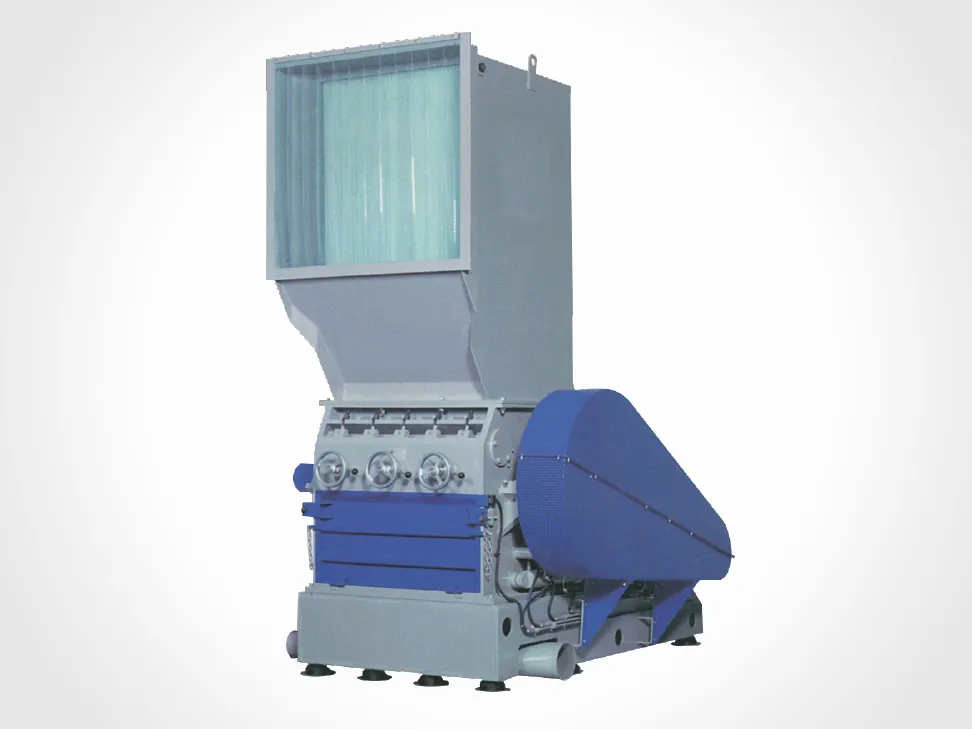
- Crusher / granulator → 8–14 mm flake; screen range 6–25 mm, and most extruders want 6–12 mm
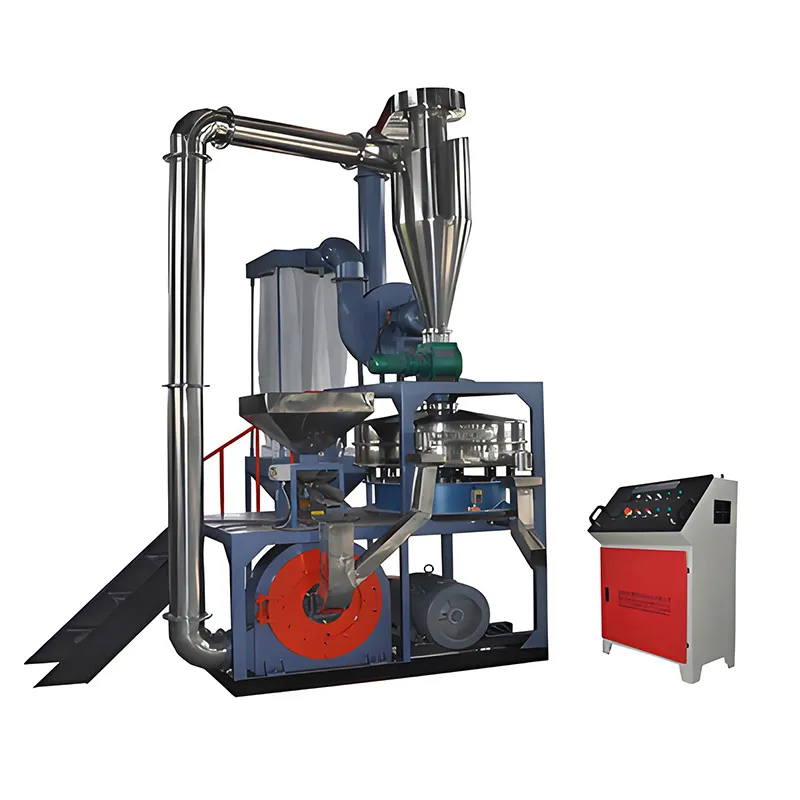
- Pulverizer (optional, when powder is the end product) → PVC 10–120 mesh, PE/LLDPE finer still
- then wash, dry, extrude and pelletize
PVC demands its own path. Dedicated screws and a vented extruder are mandatory, because running PVC through a generic PE extruder corrodes the barrel in under 400 hours. Budget for that before you size the shredder.
One rule from the field prevents most line failures: size each downstream machine 15–20% above the one before it. A 1,000 kg/h shredder mated to a 600 kg/h granulator backs up within the hour and burns the granulator bearing. Match a Zhiyi ZPC-800 heavy-duty crusher and ZPC-500 universal crusher to the shredder output, and a ZPM-800 (PVC) or ZPM-600 (PE/LLDPE) pulverizer when powder is the goal.
Motor sizing follows a simple ratio. For rigid plastics, budget 1 kW per 5–8 kg/h of rated throughput; for flexible or low-density material, 1 kW per 10–15 kg/h. And watch bulk density: a shredder rated 1,000 kg/h on rigid HDPE may deliver only 400 kg/h on loose film because bulk density collapses from roughly 350 to 30 kg/m³. Always request a capacity figure for your actual material, not the brochure number.
Blade Grade Is Where the Money Goes
- D2 (HRC 58–62) — standard, fine for clean HDPE and PP.
- SKD-11 — better wear resistance on PVC and filled compounds.
- DC53 — 62–64 HRC, about twice the toughness of D2/SKD11.
- Tungsten carbide inserts — 3–5× life on abrasive or contaminated feed, higher upfront cost.
Confirm blade price and local availability before you buy. The blade is the consumable that decides your real cost per tonne, not the sticker price of the machine.
Selection Checklist
- What is the dominant resin, and is the stream sorted or mixed?
- What is the largest single piece — do you need pre-cutting or a wider feed opening?
- What output size do you need at each stage (shredder mm → crusher mm → mesh)?
- What is your peak hourly throughput, not the annual average?
- Is PVC present? Then budget dust extraction and corrosion-resistant parts.
- Does downstream capacity sit 15–20% above upstream?
References
- ACERETECH — MS Series single-shaft shredder specification (460 mm rotor, 74 rpm, 40–100 mm screen, DC53 blades).
- Energycle — material-specific grinder configuration guide (HDPE/PP/PVC rotor speed, blade life, dust extraction).
- JianTai — plastic recycling line throughput and cost sizing (shredder → granulator → washer → extruder matching).
- Zillion — plastic crusher selection guide (blade grades, motor sizing, PVC handling).
- telectronichub — plastic crusher/shredder selection factors (throughput, material, blade design).
Frequently Asked Questions
Can one shredder handle HDPE, PP and PVC together?
Yes for the cutting stage, but PVC needs lower rotor speed and dust extraction. Run mixed streams on the PVC setting and accept slightly lower throughput on HDPE and PP, or sort PVC out before the hopper.
What screen size should I use for HDPE recycling?
Start at 40–100 mm on the shredder, then 8–14 mm (6–12 mm preferred) on the crusher or granulator feeding the extruder.
Why does PVC need dust extraction on a shredder?
Cutting PVC releases hydrogen chloride gas and fine dust. Extraction protects operators and machine internals and is mandatory in most enclosed plants.
How much motor power do I need for a plastic shredder?
For rigid plastics, budget roughly 1 kW per 5–8 kg/h of rated throughput; for flexible or low-density material, 1 kW per 10–15 kg/h. Size for peak, not average, load.
Do I need a pulverizer after the crusher for HDPE, PP or PVC?
Only if the end product is powder, such as PVC compounding or masterbatch. For pelletizing, crusher flake is enough; a pulverizer adds the ZPM-800 (PVC) or ZPM-600 (PE/LLDPE) stage.