
Single vs Double Shaft Plastic Shredder: Which Fits Your Material?
Single Shaft vs Double Shaft Plastic Shredder: Which One Fits Your Material?
The shredder is the first machine in almost every plastic recycling line. It takes bulky, awkward feedstock and reduces it to a size that washing, granulation, or extrusion equipment can handle. Pick the wrong configuration and you do not just get a slower machine — you create a bottleneck that limits the whole plant.
For most plastics operations the choice comes down to two designs: the single shaft shredder and the double shaft (twin shaft) shredder. They share a name but use different cutting mechanics, and that difference decides which materials each one handles well. This article explains how each works, where each one fails, and how to match the right machine to your material — then places the shredder inside the wider size-reduction train that ends with a crusher and a pulverizer.
How a single shaft shredder works
A single shaft shredder has one rotor fitted with cutting knives that shear material against a stationary counter-knife. A hydraulic ram pushes feed steadily into the rotor. Beneath the rotor sits an interchangeable screen: material stays in the cutting chamber until it is small enough to pass through the screen holes, typically 20–100 mm depending on the configuration.
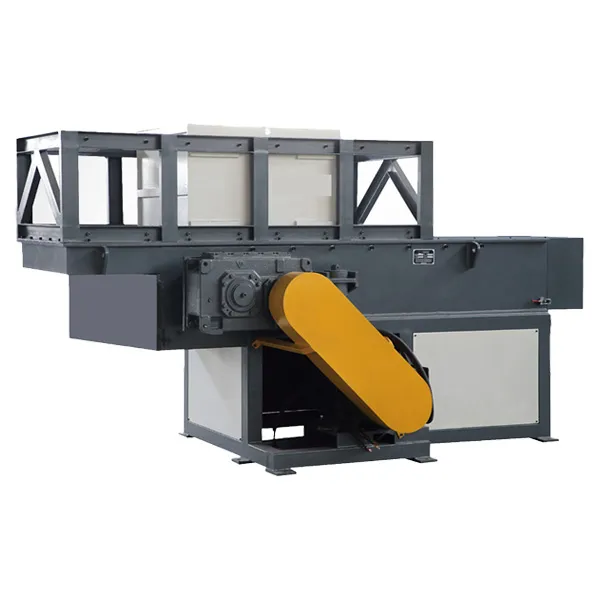
Because the screen sets the exit size, a single shaft machine produces a relatively uniform particle. That uniformity matters when the output feeds directly into a granulator, extruder, or washing line. The hydraulic ram also protects the drive: when motor load spikes, the ram backs off instead of forcing the rotor.
Typical single shaft throughput runs from roughly 200 kg/h on a compact unit up to 2,000–3,000 kg/h on a wide rotor with a 90–110 kW drive. Rotor speed is low — usually 45–100 rpm — so noise and dust stay manageable. Most modern units run a PLC with automatic overload reversal: if the rotor jams, it reverses to clear the chamber before resuming.
How a double shaft shredder works
A double shaft shredder uses two counter-rotating shafts fitted with interlocking, hook-shaped blades. The shafts pull material inward and tear it apart through a combination of shear and torsion. Most double shaft designs run without a sizing screen.
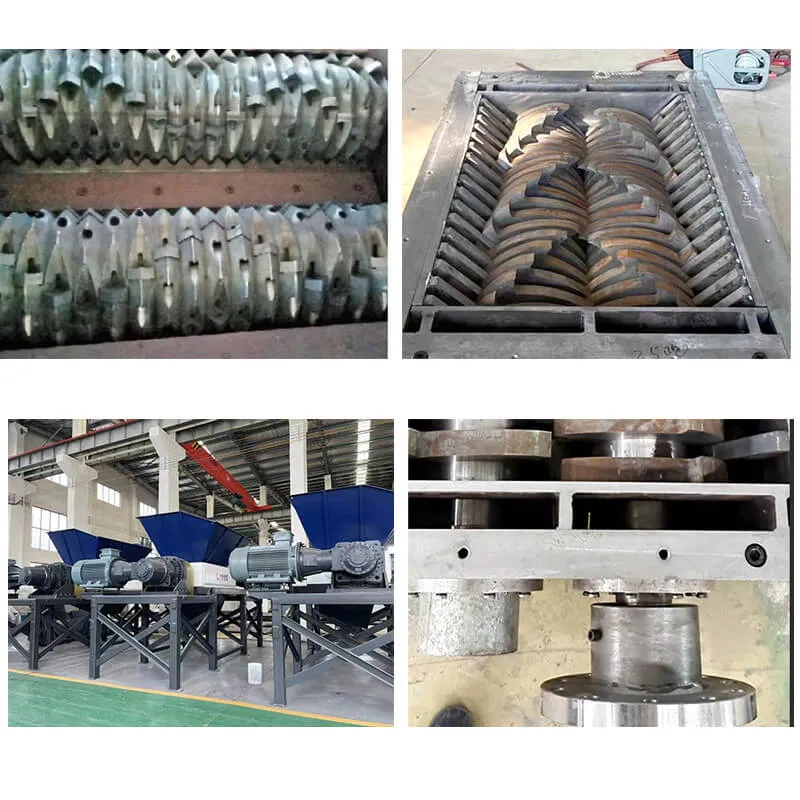
Output size is set by blade thickness, blade spacing, and rotation speed rather than a screen. The result is coarse, irregular pieces — but the machine shrugs off bulky, thick-walled, or lightly contaminated feed that would jam a single shaft unit. Operating speed is even lower than a single shaft machine, while torque is far higher. A PLC monitors shaft load and reverses the shafts automatically if it detects an unshreddable object or overload, protecting blades, shafts, and gearboxes.
Double shaft throughput commonly spans 500–5,000 kg/h, with heavy models reaching higher. Energy use per ton is higher than a single shaft machine because two shafts and larger drives are involved.
Single shaft vs double shaft: the dimensions that matter
| Selection factor | Single shaft shredder | Double shaft shredder |
|---|---|---|
| Cutting mechanism | One rotor shears against a fixed counter-knife | Two counter-rotating shafts tear and shear |
| Feeding | Hydraulic ram pushes material into the rotor | Shafts self-feed by grabbing |
| Output size control | Screen-controlled, relatively uniform (20–100 mm) | Set by blade geometry, coarser and less uniform |
| Best feedstock | Film, bags, lightweight rigid plastics, purgings | Thick-walled rigid plastics, drums, mixed waste |
| Throughput | ~200–3,000 kg/h | ~500–5,000 kg/h |
| Jamming with film | Low with anti-wrap rotor and ram feed | Higher — film tends to wrap the shafts |
| Contamination tolerance | Moderate; metal damages knives | High; auto-reverse handles shocks |
| Energy per ton | Lower | Higher |
| Typical role | Secondary, controlled reduction to uniform flake | Primary, coarse pre-shredding |
Throughput ranges vary by model, motor power, and material bulk density. Treat the figures above as planning ranges, not guarantees — confirm against a representative sample of your own feedstock.
Matching the shredder to your material
Film, bags, and flexible plastics (PE film, PP woven bags, agricultural film)
Low bulk density films wrap around rotating shafts and form strands that block the chamber. A single shaft shredder with ram feeding and an anti-wrap rotor is the standard choice: the ram holds film against the rotor instead of letting it wrap, and the screen releases material only at target size. A double shaft machine can handle film, but only with a rotor specifically adapted for flexible material — otherwise wrapping and jamming risk climbs sharply.
Rigid and thick-walled plastics (HDPE drums, PVC pipe, bumpers, pallets)
These need high torque to cut through thick walls and irregular shapes. A double shaft shredder distributes force across two shafts and accepts large items without pre-cutting. For HDPE and PVC in particular, the double shaft machine is often the primary stage before any further size reduction.
PP and LLDPE purgings and lumps
Dense, solid purgings from extrusion and injection molding are hard but predictable. A single shaft shredder with a robust rotor handles them well and delivers the uniform flake that downstream granulators prefer. Very large purging blocks may need double shaft pre-shredding first.
Where the shredder sits in the full size-reduction train
A shredder is rarely the last machine. In a complete plastic recycling line it is the coarse pre-break stage, followed by a crusher (granulator) and, for certain materials, a pulverizer.
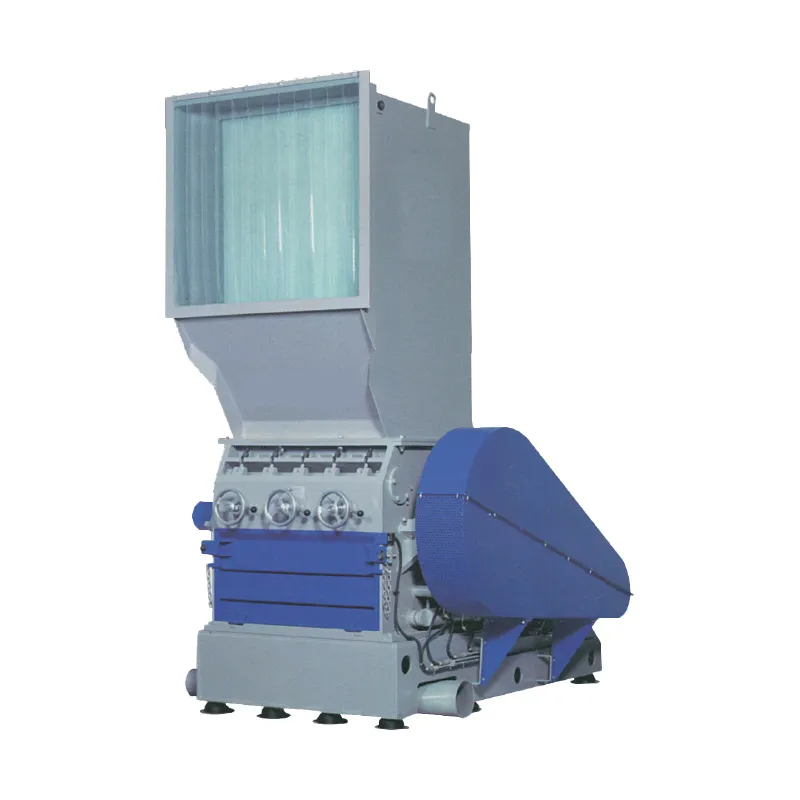
Shredder to crusher (granulator)
After shredding, a plastic crusher (often called a granulator) takes the coarse pieces and cuts them into a consistent flake, typically 6–12 mm. This is the stage that produces saleable regrind or feed for reprocessing. In many plants a double shaft shredder does the primary break and a single shaft shredder or granulator delivers the final uniform size — the two machines are complementary, not competitors.
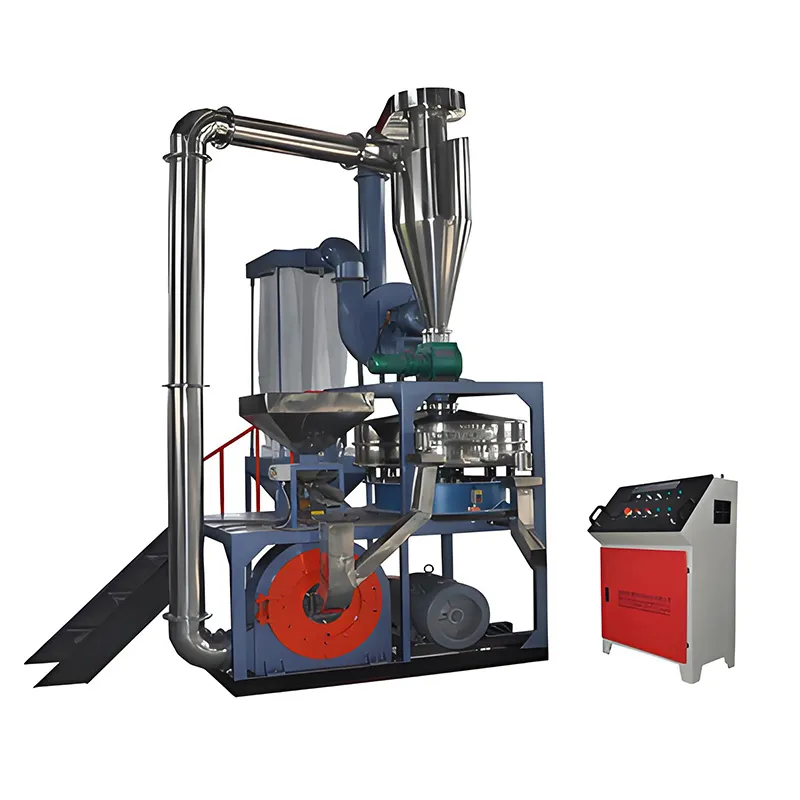
Crusher to pulverizer
A plastic pulverizer is the final refinement step for materials that must enter production as powder rather than flake. PVC profile and pipe scrap, for example, is pulverized to a specified mesh (commonly 20–60 mesh) before compounding or extrusion. PE and LLDPE can also be milled when the process calls for powder feed. The pulverizer only performs well when the feed is already uniform flake from the crusher — it is not a substitute for a shredder.
The practical sequence for rigid PVC recycling is therefore: double shaft shredder to crusher to PVC pulverizer. For film and bags, it is usually single shaft shredder to crusher to repelletizing, with a pulverizer brought in only when powder is required.
A practical selection checklist
- What is the largest single piece the machine must accept? Bulky drums and purgings need a wide feed opening and high torque — lean double shaft.
- How uniform must the output be? If a defined top size feeds your next machine, a screen-equipped single shaft or granulator is required.
- How clean is the feed? Mixed or lightly contaminated waste favours the double shaft's auto-reverse and shock tolerance.
- What happens downstream? Plan the shredder, crusher, and pulverizer as one train, not three separate purchases.
- What is the target tonnage per shift? Match rotor diameter, motor power, and operating hours to required kg/h.
Frequently asked questions
Can a double shaft shredder replace a granulator?
Not for uniform regrind. A double shaft shredder produces coarse, irregular pieces. If your next process needs consistent flake (6–12 mm) or powder, a crusher or pulverizer must follow it.
Which shredder handles PE film best?
A single shaft shredder with a hydraulic ram and anti-wrap rotor is the reliable choice for film and woven bags. It prevents wrapping and controls output size through the screen.
Do I need a pulverizer for PVC recycling?
If the PVC scrap is reprocessed as powder — common in profile, pipe, and compounding lines — yes. PVC is typically pulverized to 20–60 mesh after crushing. For flake-to-pellet routes, a pulverizer is optional.
Is a single shaft shredder cheaper to run?
Generally yes on energy per ton and simpler maintenance, because it has one rotor and a smaller drive. A double shaft machine costs more to run but absorbs contamination and bulky feed that would stall a single shaft unit.
Can both machines run on the same line?
Yes, and it is common. A double shaft shredder pre-breaks bulky or mixed material, then a single shaft shredder or granulator delivers the uniform output. This combination covers the widest range of feedstock.
References
- Rehoboth Machinery — Single-Shaft vs Twin-Shaft Shredder for Plastic Recycling (shredder role in the recycling line, throughput ranges)
- Beisu Machinery — Industrial Plastic Single Shaft Shredder System (rotor speed 45–100 rpm, screen sizes 20–100 mm, PLC auto-reverse)
- Wensui Machinery — Industrial Shredders for Plastic Waste Recycling (model power, rotor width, throughput, screen hole sizes)
Zhiyi Machine builds single shaft shredders (ZSS series), plastic crushers (ZPC series), and plastic pulverizers (ZPM series) for HDPE, PP, PVC, and LLDPE recycling lines. If you are specifying a line and want the shredder, crusher, and pulverizer matched to your actual feedstock, send a sample and throughput target to our engineering team.