
PET Bottle Recycling: Choosing the Right Shredder and Crusher
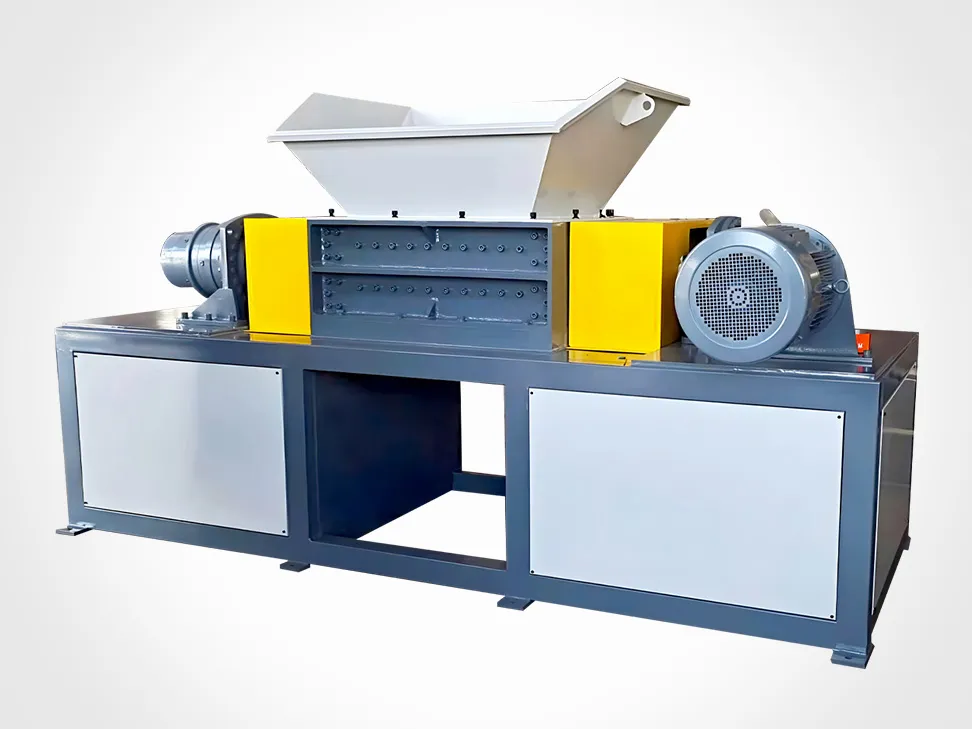
PET is the one material where the recycling line is usually designed backwards. Buyers start from the flake spec their washing plant or end customer will accept, then work back to the crusher, then to the shredder. That order matters, because PET punishes shortcuts in two specific places: the first cut, and the screen.
This guide covers the size reduction half of the line — from bales or loose bottles down to flake that is ready for washing. If you are still deciding whether you need a shredder at all, read shredder vs crusher first.
The short answer
Baled bottles: bale breaker or a slow-speed double shaft shredder, then a crusher. Whole loose bottles: a single shaft shredder with a hydraulic ram still pays for itself, because PET bottles spring back and bridge in a plain hopper. Preforms and rejects: a crusher alone is often enough.
The crusher is the stage that decides flake size, and flake size is set by the screen, not the blades. On our ZPC universal crusher the interchangeable screen runs 6–20 mm; on the heavier ZPC-HD it runs 8–20 mm. For most PET bottle lines the working range is at the lower end of that, with the exact hole size chosen against the washing plant's feed spec.
Why PET behaves differently from HDPE and PP
Three properties drive every decision downstream.
It is elastic before it is brittle. A bottle deforms under the blade instead of shattering, so a machine that crushes HDPE crates cleanly can sit there bouncing whole bottles. This is why PET lines are built around compression as much as cutting.
Bulk density is extremely low in the whole state. Loose bottles occupy a great deal of volume for very little mass, so the first stage is usually limited by volume, not by motor power. Baled bottles are the opposite problem — dense enough to stall a light rotor.
The material remembers heat. PET softens and smears if the cutting chamber gets warm and the material dwells. Large quantities of fines, or flake that looks melted along the cut edge, usually mean the material is recirculating in the chamber rather than passing through the screen.
Decide the first stage: bales, whole bottles or preforms
Write down what actually arrives at the gate. This is the single question that determines the rest of the line.
- Baled bottles — need a bale breaker, or a slow-speed unit with enough torque to pull the bale apart. Feeding a bale directly into a high-speed crusher is a common and expensive mistake.
- Whole loose bottles — volume-limited. You want a compression feed and a coarse first cut, not a fine one.
- Preforms, rejects and sheet offcuts — dense, uniform and surprisingly easy to granulate. A crusher with the right screen can carry the whole job.
- Already baled and pre-sorted, from a collection scheme — consistent enough that line sizing becomes a straightforward mass-balance calculation.
Shredder selection for PET
A single shaft machine with a hydraulic ram and automatic compaction is the default first stage for PET. The ram keeps the chamber loaded, which is what stops bottles from riding on top of the rotor. Our ZSS series runs from 22–30 kW up to 132–160 kW with rotor speeds of 70–80 RPM and a 40–100 mm screen; the low rotor speed keeps heat and fines down, which matters more on PET than on any other common plastic.
Where the feed is a mix of bottles, crates, drums and other rigid scrap, a combo single/double shaft machine gives you a coarser, more tolerant first cut — 40–120 mm output, set by blade spacing, at shaft speeds of 16–24 RPM. Coarse output is not a compromise here; it is the point. The shredder's job is to make the material feedable, not to make it small.
If you are choosing between the two, the comparison in single vs double shaft shredder covers the trade-offs on throughput and output shape in more detail.
Crusher and granulator: hitting the flake size buyers accept
The crusher does the real work on PET. Two blade families cover almost every case, and the choice is driven by what the material does when it hits the rotor rather than by throughput alone.
- Flat (paddle) blades — the standard on the ZPC series, rotor speeds of 580–650 RPM, 9–24 rotor blades with 2–6 stationary blades, and a 6–20 mm screen. Suited to bottles, preforms and thin-walled parts.
- Claw (prong) blades — the ZPC-HD series, 500–580 RPM with 15–30 rotor blades, an 8–20 mm screen and cutting chambers up to 1600×1000 mm. The claw geometry grabs and pulls bulkier feed, which matters when the shredder upstream is producing coarse 100 mm pieces.
The comparison of the two geometries is covered in claw vs flat blades. On a PET line the useful rule is: match the blade geometry to the shape of the shredder output, and match the screen to the washing plant.
Screen choice, fines and dust
The screen decides two things at once and you cannot optimise both. A smaller hole gives you a tighter flake spec and less recirculation of oversized pieces; it also reduces throughput and increases the time material spends in the chamber.
PET turns that trade-off into a quality problem rather than just a capacity problem. Material held in the chamber heats and smears, and smeared flake is what the washing line struggles with, because the melted surface traps label fibre and glue. If you see throughput drop and fines rise at the same time, the screen is usually too fine for the blade condition and the feed rate.
Two practical checks before you commit to a hole size:
- Run a sample of your actual feed through the machine at the intended screen and sieve the output. Do not accept a sieve analysis run on somebody else's bottles.
- Check blade clearance at the same time. Worn blades plus a fine screen is the combination that produces the most fines per tonne.
For the throughput side of this, including the correction factors that separate a rated figure from a real one, see what throughput to expect.
Contamination: caps, labels, glue and metals
Size reduction cannot fix contamination that the earlier stages should have handled, and PET lines tend to be judged on flake purity, so it is worth being explicit about what each stage can and cannot do.
- PP and HDPE caps — different density, separated later in the wash tank. Your shredder and crusher only need to liberate them, which means the first cut should not be so fine that caps and bottle fragments are indistinguishable.
- Labels and glue — partly removed by washing, partly by friction. Fine grinding does not remove them; it drives them into the flake surface.
- Metal — a metal detector or magnet before the crusher is significantly cheaper than a set of blades and a screen. Blades damaged by tramp metal usually fail as a cluster of chipped teeth rather than a single break.
- Stones and glass — the reason a washing line upstream of the fine stage is worth planning for, and the reason chamber liners exist.
Line sizing, and three mistakes we see most
Size the line from the end, not from the shredder. Fix the flake spec and the washing plant's required feed rate, then work back: crusher capacity, screen size, shredder capacity, and finally the compression feed and hopper volume. A line runs at the speed of its slowest stage, and in PET lines that stage is almost never the shredder.
Mistake one: buying the crusher first. The crusher is the stage most sensitive to feed shape. Choose the first stage first, then specify the crusher against the shape it will actually receive.
Mistake two: assuming the rated throughput. Rated figures assume a feed the machine rarely sees. On bottles, expect the real number to sit well below the plate value and to move with the season, the collection scheme and how well the material was de-baled.
Mistake three: treating the screen as a spare part. On PET, screen hole size and blade condition are quality controls, not maintenance items. Buy several screens with the machine, in the sizes either side of your target, and treat them as tooling.
For the wider question of what each machine class in the line is for, the product range by category is the fastest way in: shredders, crushers and pulverizers.
References
- ZSS single shaft shredder specification table — motor 22–30 kW to 132–160 kW, rotor 70–80 RPM, screen 40–100 mm, hydraulic ram with auto compaction.
- ZPC universal crusher specification table — rotor 580–650 RPM, 9–24 rotor blades, screen 6–20 mm interchangeable.
- ZPC-HD heavy duty crusher specification table — rotor 500–580 RPM, 15–30 rotor blades, screen 8–20 mm, cutting chamber up to 1600×1000 mm.
- ZDS combo shredder specification table — shaft speed 16–24 RPM, output 40–120 mm adjustable by blade spacing.
Frequently Asked Questions
Do I need a shredder before a crusher for PET bottles?
For baled or loose whole bottles, yes. A crusher alone will bounce and bridge on whole bottles and will wear quickly on bales. The shredder makes the material feedable and removes the volume problem; the crusher then sets the flake size. For preforms, sheet offcuts and already-crushed rejects, a crusher with the right screen can carry the whole job on its own.
What screen size should a PET crusher use?
It is set by the flake spec your washing plant or end buyer accepts, not by a universal number. Our universal crushers run 6–20 mm interchangeable screens and the heavy duty range runs 8–20 mm. Run a sieve analysis on your own feed at the intended hole size before committing, because throughput and fines both move with that one choice.
What flake size do PET buyers expect?
Buyers buy against a sieve specification, so the practical answer is to obtain that spec in writing first and then size the screen to hit it. The common failure is a line that produces flake slightly too coarse, which then has to be re-run, or too fine, which raises fines and dust and can cost you yield in the washing stage.
Can one machine handle both bottles and preforms?
Usually yes, with a screen change. Preforms are dense and uniform and granulate easily; bottles are elastic and volume-limited and need a compression feed upstream. A single shaft shredder with a hydraulic ram plus a crusher covers both, but you should expect to run different screens for the two feeds.
How do I remove caps and labels?
Caps are separated by density later in the washing line, so the size reduction stage only has to liberate them — which means the first cut should not be so fine that caps and bottle fragments become indistinguishable. Labels and glue are removed partly by washing and partly by friction; fine grinding does not remove them, it presses them into the flake surface.
What throughput should I size a PET line for?
Size from the flake spec backwards, not from the shredder forwards. Fix the washing plant feed rate, add headroom of roughly 15–20 percent at each stage, and remember that a line runs at its slowest stage — which on PET is usually the compression feed or the crusher, not the shredder.