
 1 / 3


Combo Single/Double Shaft Plastic Shredder
Versatile combo shredder combining single and double shaft technology for efficient processing of films, woven bags, jumbo bags, ropes, non-woven fabric, and municipal solid waste. Available in 5 models with dual motor drive.
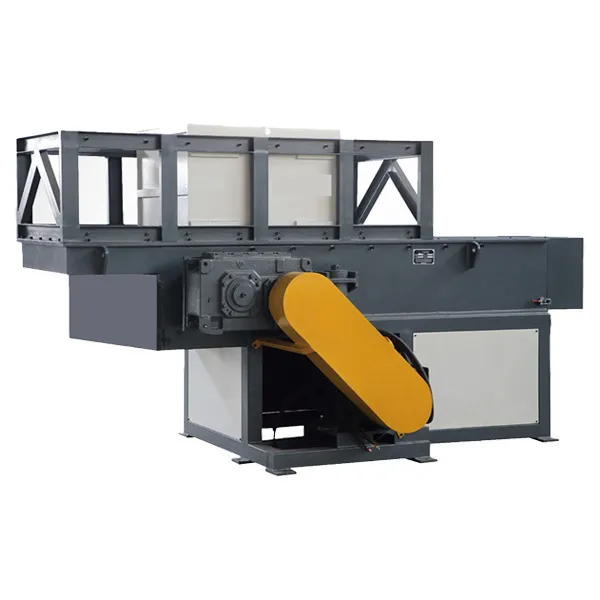
The ZDS Series is a combo single and double shaft plastic shredder that pairs a single-shaft cutting rotor with a counter-rotating twin-shaft feed section. Two motors from 22 kW × 2 to 132 kW × 2 drive the shafts at 16-24 RPM through planetary gear reducers, giving 500-1800 kg/h with output adjustable between 40 and 120 mm. It is selected for bulky or low bulk density plastic waste — film, jumbo bags, woven sacks and mixed streams — that a plain single-shaft machine cannot grip reliably.
Technical Specifications
| Model | ZDS-600 | ZDS-800 | ZDS-1000 | ZDS-1300 | ZDS-1500 |
|---|---|---|---|---|---|
| Motor Power | 22kW×2 | 37-45kW×2 | 45-55kW×2 | 75-90kW×2 | 110-132kW×2 |
| Shaft Speed | 16-24 RPM | ||||
| Blade Material | SKD-11 Alloy Steel | ||||
| Throughput | 500 kg/h | 700 kg/h | 1000 kg/h | 1300 kg/h | 1800 kg/h |
| Output Size | 40-120 mm (adjustable blade spacing) | ||||
| Drive System | Dual Planetary Gear Reducer | ||||
Combo Single/Double Shaft Shredder ZDS Series
The ZDS series combo shredder combines the material handling flexibility of a single shaft design with the aggressive cutting power of a double shaft configuration. This hybrid approach delivers efficient size reduction for films, bags, fabrics, and municipal waste that would be challenging for either design alone.
Key Features
- Dual independent motor drive system for balanced torque distribution
- SKD-11 alloy steel blades with long service life and reversible cutting edges
- Automatic reverse rotation on overload to prevent blade damage
- Low-speed high-torque design minimizes noise and dust generation
- Siemens PLC touchscreen control panel with real-time load monitoring
- Heavy-duty planetary gear reducer for reliable 24/7 operation
- Hopper with integrated safety screens and emergency stop system
Processing Materials
Plastic films, jumbo bags (FIBC), woven bags, waste fibers, plastic ropes, non-woven fabric, chemical fiber filament, municipal solid waste (MSW).
Applications
Film and bag recycling facilities, textile waste processing, municipal solid waste pre-treatment, agricultural film recycling, post-consumer packaging waste.


What "Combo" Actually Means
The ZDS runs a single shaft and a double shaft configuration in one frame, which is a different proposition from buying two machines. A single shaft shredder shears material against a counter-knife with screen control; a double shaft machine tears it between two counter-rotating hook-toothed shafts and controls size with blade spacing. Feedstocks do not always respect that distinction. A mixed stream of purgings, film and rigid scrap will behave well in one mode and badly in the other depending on the day.
The combo arrangement lets an operator switch rather than compromise. It suits recyclers whose input changes with whatever arrives on the truck, and plants that would otherwise idle one machine while running the other.
Output Size and Where It Sits in the Line
With blade spacing adjustable between 40 and 120 mm, the ZDS produces a coarser, more irregular flake than a screen-controlled single shaft machine. That is the right feed for a heavy duty granulator, which takes the flake down to 8–20 mm. Lines targeting powder add a disc pulverizer after the granulator.
Dual planetary gear reducers drive both shafts, which is what allows the machine to run at 16–24 RPM while still delivering the torque needed for thick-walled stock. Low shaft speed is not a weakness here — it is how the machine absorbs shock loading from contaminated feed without destroying the drive train.
Selecting a Model
Throughput ranges from 500 kg/h on the ZDS-600 to 1,800 kg/h on the ZDS-1500, with motor power from 22 kW × 2 up to 110–132 kW × 2. Choose on the basis of peak feed rate rather than average, because the machines are usually sized by the worst bale of the month, not the typical one.
Where the stream is consistently rigid and clean, a dedicated single shaft machine with a screen will give a more uniform flake. The combo earns its cost when the stream is not consistent.
Operating Notes
Shaft speed, blade spacing and knife condition interact. Widening the spacing raises throughput and produces coarser output; narrowing it does the reverse and increases load. Operators who chase throughput by opening the spacing to its maximum usually pay for it downstream, when the granulator has to work harder on oversized flake.
SKD-11 knives are standard. As with any shredder, contamination — metal fittings, sand, glass-filled compounds — is the main driver of wear, and screening the input is cheaper than replacing knives.
Related Reading
Frequently Asked Questions
By blade spacing. The ZDS has no sizing screen; instead the gap between the counter-rotating shafts and their hook knives determines the flake size, adjustable across 40–120 mm. The result is a coarser and less uniform output than a screened single shaft machine, which is fine when a granulator follows.
When the incoming material is not consistent. Plants running a stable, known stream get better results from a dedicated machine tuned to it. Plants taking mixed post-commercial or post-industrial scrap, where the mix changes week to week, get more value from being able to switch configuration.
Roughly 500 kg/h on the ZDS-600 up to 1,800 kg/h on the ZDS-1500, with twin motors from 22 kW each to 110–132 kW each. Actual figures depend on material density and form — film and light scrap will not reach the same kg/h as dense rigid parts.
Torque and shock tolerance. Low speed with a planetary gear reduction lets the shafts bite thick-walled or contaminated stock without stalling, and it absorbs the load spikes that would otherwise damage a faster, direct drive.
Yes, though film is the hardest feed for any tearing-type shredder because it wraps and resists being drawn between the shafts. Baled film works better than loose. Where film is the dominant feedstock, a screened single shaft machine with a ram is usually the better purchase.
No. It is one frame with one drive system — dual planetary gear reducers serving both shafts. Switching configuration is a setup change, not a second machine to staff and maintain.

Interested in This Machine?
Tell us your material type, desired throughput, and output size — our team will provide a tailored recommendation and quotation.