
Crusher Screens and Pulverizer Mesh: Matching Output Size to Throughput
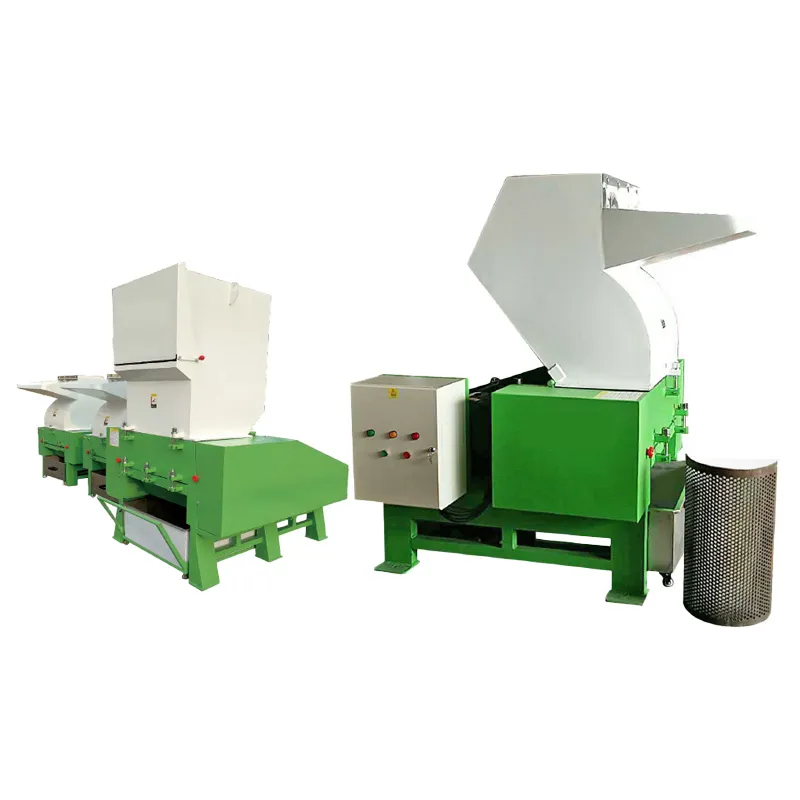
Almost every sizing argument on a recycling line comes down to one component: the screen in the crusher, or the mesh and classifier on the pulverizer. Change it and you change two things at once — the output size, and the rate at which the machine can produce it. Understanding that trade-off is what turns a specification into a deliverable.
What output size actually means at each stage
The phrase is used loosely, and the looseness causes real problems. Each stage of a size reduction line produces a different kind of output, and they are measured differently.
- Shredder output — a coarse, irregular fragment, defined by the largest dimension that passes the blade spacing or the coarse screen. On our single shaft range the screen runs 40–100 mm; on the combo range output is 40–120 mm; the double shaft range runs 40–150 mm, all controlled by blade spacing rather than by a fine screen.
- Crusher output — flake, defined by a screen. The ZPC universal range runs interchangeable screens from 6–20 mm; the ZPC-HD range runs 8–20 mm. This is the stage where a change of screen gives a fast, visible change in output.
- Pulverizer output — powder, defined by mesh or micron, and by the classifier rather than by any single screen. The MPD range produces 60–150 mesh from a ≤10 mm feed; the MF range produces 10–120 mesh using a vertical disc mill with a vibration screen classifier.
Confusing these three is the origin of most unrealistic expectations. A crusher screen quoted in millimetres cannot be compared directly with a pulverizer mesh figure, and neither of them is a promise about the whole output — only about the largest particles that pass.
How screens and mesh are specified
A crusher screen is described by hole size, hole shape, thickness and open area. The nominal figure everyone quotes is the hole size; the other three decide what you actually get.
Pulverizer mesh works differently. Mesh is a count of openings per linear inch, so a larger mesh number means a finer powder, and the figure is only meaningful when the standard it comes from is stated — different mesh scales do not line up exactly. For process work, micron and a measured particle size distribution are more useful than mesh alone. If you need to convert, treat mesh as a rough indicator and confirm with a sieve.
The screen–throughput trade-off
This is the one relationship worth internalising: for the same machine, the same material and the same blade condition, a smaller hole always means lower throughput and a longer dwell time in the chamber.
The mechanism is straightforward. Oversized material recirculates until it is small enough to pass. A smaller hole means more material recirculating, more re-cutting, more fines, and more heat in the cut. Three effects follow, and all three matter:
- Throughput falls, and it falls faster than the hole size changes.
- Fines rise, because each pass through the rotor produces a proportion of dust and small particles.
- Temperature in the cutting chamber rises, because the same material is being worked on more times per kilogram.
The third effect is the one that surprises people. On heat-sensitive material, a screen that is one step too fine can produce flake with smeared edges, and it will be blamed on blade sharpness or on the material. The sizing context, including the correction factors that turn a rated figure into a real one, is covered in what throughput to expect.
Hole shape, open area and thickness
Three details that quietly change performance:
Hole shape. Round holes give the most predictable maximum particle dimension and are the usual choice for flake. Slotted or elongated holes pass more material for the same nominal size and are useful where throughput dominates and a slightly elongated particle is acceptable. The two are not interchangeable if a downstream buyer has specified a maximum dimension.
Open area. The proportion of the screen plate that is actually hole. Two screens with the same hole size but different open area will run at noticeably different rates — the one with more open area passes material faster for the same nominal cut. When comparing screens, compare open area, not just hole size.
Thickness. A thicker plate lasts longer against abrasive feed and tramp metal, and passes slightly less material because each hole is a longer tunnel. Where feed is clean, a thinner plate with more open area is often the better trade.
Pulverizer mesh, classifier and particle size distribution
On a pulverizer the screen is only part of the picture. The machine produces a distribution, and the classifier decides which part of it leaves the machine and which part goes back for another pass.
Two practical consequences. First, the mesh figure describes the fine end, not the whole output — a mill set to a given mesh still produces a spread of particles around it, and that spread matters more than the headline number for demanding processes. Second, the classifier setting, not the mesh, is often the adjustment that stabilises a drifting product. On the MF range the vibration screen classifier is an explicit part of the design for that reason.
Where the requirement is a specific powder for a specific process, the powder specification usually matters more than the mesh: particle size distribution for rotational moulding is a good example of a process where the distribution, not the maximum, is what determines whether the product is usable.
Measuring output: sieve analysis in practice
The only reliable way to know what a screen change does is to measure. A sieve analysis on a representative sample, taken from a machine running at production feed rate, tells you more than any specification sheet.
Practical rules for a sample that means something:
- Take it at production feed rate, from steady-state running — not from the first few minutes after start-up.
- Take enough material for it to be representative. A handful off the top of a pile is not a sample.
- Record blade condition and running hours alongside the result, otherwise you cannot compare it with the next test.
- Repeat on the same material season to season. Feed changes, and a screen that was right in one batch can be wrong in the next.
If a supplier quotes an output size, ask what screen it was achieved on, at what feed rate, and with blades in what condition. Those three qualifiers are the difference between a number and a commitment.
Matching output to the downstream process
Output size is only right or wrong relative to what comes next. Some common pairings:
- Washing and flotation — needs flake that is large enough to be handled and dense enough to sink predictably, and small enough that labels and glue are liberated. Too fine is a yield problem here.
- Rotational moulding — needs a powder with a controlled distribution. This is a pulverizer stage, not a crusher stage, and the mesh is chosen against the powder spec.
- Extrusion and injection feed — usually needs consistent flake or granule with a predictable bulk density so that the feed throat meters evenly.
- Masterbatch and compounding — needs a fine, consistent powder; the vertical disc range with its sealed milling chamber and dust collection is designed for this kind of duty.
For the selection logic behind the last stage, how to choose the right plastic pulverizer covers the material-to-machine mapping. Routine upkeep of the discs and screens is covered in the pulverizer maintenance checklist.
Common mistakes
- Specifying flake size without specifying the measurement. A maximum dimension, a sieve range and a mesh number are three different claims.
- Changing the screen to fix a throughput problem that is actually a blade problem. Dull blades and a coarse screen produce a wide spread; fresh blades and the right screen produce a tight one.
- Comparing screens on hole size alone. Open area and thickness decide real performance.
- Buying one screen. Buy the sizes either side of target and treat them as tooling. The cost is small next to a line that cannot hit its spec.
- Assuming the rated figure survives the screen change. It rarely does, and it never does on fine screens with difficult material.
Machine ranges for reference: crushers and granulators and pulverizers.
References
- ZPC universal crusher specification table — interchangeable screen 6–20 mm, rotor 580–650 RPM, 9–24 rotor blades.
- ZPC-HD heavy duty crusher specification table — interchangeable screen 8–20 mm, rotor 500–580 RPM, 15–30 rotor blades.
- MPD vertical disc pulverizer specification table — feed ≤10 mm, output 60–150 mesh adjustable by plug bolt, sealed milling with cyclone and dust collector.
- MF PE pulverizer specification table — feed ≤10 mm, output 10–120 mesh adjustable by screen and plug bolt, vertical disc mill with vibration screen classifier.
- ZSS and ZDS shredder specification tables — coarse output defined by screen (40–100 mm) and blade spacing (40–120 mm / 40–150 mm).
Frequently Asked Questions
Does a smaller crusher screen always give a finer output?
It gives a smaller maximum particle size, which is not the same thing. Output is a distribution: the screen controls what is allowed to leave, while the rotor, blade condition and material decide the spread around it. A fine screen on dull blades can produce a wider spread with more fines than a coarser screen on fresh blades.
How do mesh and micron convert?
Approximately, and only approximately. Mesh counts openings per linear inch, so a higher number is finer, but different mesh standards do not line up exactly. For process work, specify in micron and confirm with a sieve analysis rather than relying on a mesh figure alone.
Why did throughput drop when I fitted a finer screen?
Because oversized material now recirculates until it passes. A smaller hole means more re-cutting per kilogram, which lowers throughput, raises fines and raises temperature in the cutting chamber. The drop is usually steeper than the change in hole size would suggest.
What screen size should I use for flake going to a wash line?
Whatever size the wash line and end buyer specify, measured the same way they measure it. In practice that means working within the 6–20 mm interchangeable range on a universal crusher or 8–20 mm on a heavy duty machine, and confirming with a sieve analysis on your own feed rather than on a sample from another plant.
What mesh does a pulverizer need for rotational moulding powder?
The mesh figure alone is not sufficient, because rotomoulding is sensitive to the whole particle size distribution rather than to the fine end. Our pulverizers cover 10–120 mesh with an adjustable classifier; the powder specification for the process sets the target, and the classifier setting is what holds it stable.
How often should screens be replaced?
On condition, not on a fixed schedule. Inspect for hole wear, elongation and cracks whenever blades are changed, since a screen that has worn oval no longer holds the size it was specified for. Buying screens in the sizes either side of target makes replacement a tooling decision rather than a production stop.